

- Blog
- Good practices
- What is FUNDAE’s sustainability training and how can companies benefit from it?

What is FUNDAE’s sustainability training and how can companies benefit from it?
- 06/10/2026
- Magda Cebrián
Each month, your company pays a professional training contribution to Social Security. This is 0.70% of each employee’s contribution base (0.60% from the company, 0.10% from the employee). This contribution generates an annual training credit that you can use to train your team. If you don’t use it, you lose it.
This is FUNDAE: the State Foundation for Employment Training . And what many companies still don’t know is that this funding can be used for training in sustainability, the circular economy, and environmental regulatory compliance —exactly the skills that European regulations are already requiring.
In this article we explain how it works, how much credit you have available and how to convert that fee you are already paying into training that prepares your team for the sustainability challenges of 2026 and beyond.
Training related to sustainability and the green economy will receive special attention, promoting the transition towards more responsible and sustainable business practices.
Source: FUNDAE Bonus Updates in 2025
Browse through the publication
Requirements for my company to access FUNDAE sustainability courses
The State Foundation for Employment Training (FUNDAE) offers all Spanish companies an annual subsidized training credit. Accessing this credit for sustainability courses is simpler than it seems, but there are a number of conditions you must meet before enrolling your staff.
🏢 Be up to date with Social Security and Tax Authorities
The company must be up to date with its Social Security and Tax obligations. Without this requirement, access to credit is automatically blocked.
💼 Get a quote for Vocational Training
Only companies that contribute to the Vocational Training contingency fund generate training credits. Self-employed individuals without employees are excluded from this system.
👤 Workers must be registered
Participants in the training must be active employees with a current contract with the company during the course.
📋 Communicate the training activity
The company or organizing entity must communicate the start of the course through the FUNDAE platform with the minimum advance notice established (generally 7 business days).
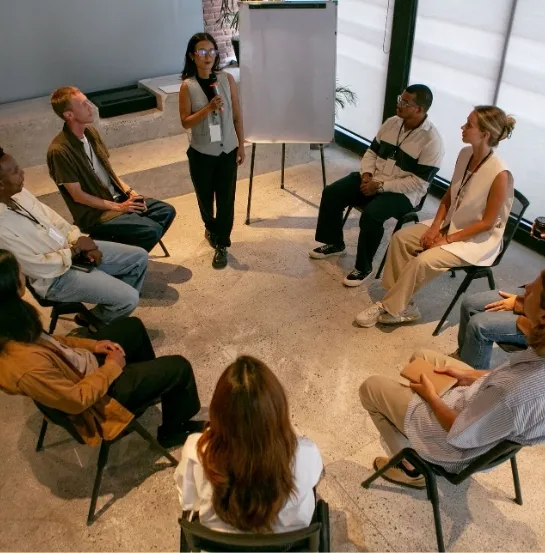
Accessing FUNDAE sustainability training is easier than it seems. We’ll explain all the requirements so your company can start training at no cost.
📊 Exceed the minimum attendance
Each participant must complete at least 75% of the teaching hours in order for the company to apply the corresponding bonus to that person.
🌱 The course must be FUNDAE certified
The training entity (such as Go Zero Waste) must have the organizing entity identification code and the courses must have the corresponding certification.
How much credit does my company have?
The credit depends on the size of the company and the Vocational Training contribution paid the previous year. It ranges from 100% of the amount paid (companies with 1 to 5 employees) to 50% (more than 250 employees). SMEs usually have enough to cover one or more sustainability courses per year at no additional cost.

Every company that pays into the Social Security system has FUNDAE training credits for its staff. Do you know how much you have available and how to use it?
Average duration of FUNDAE sustainability programs
There is no single format. FUNDAE sustainability programs are tailored to each organization’s objectives and the actual time available to the teams. The duration of the program determines both the amount of funding available and the depth of the content.
What duration do we at Go Zero Waste recommend?
- For teams with no prior training: an 8-hour workshop as a starting point, followed by a 20-hour program over the next 3 months.
- For those responsible for environment or CSR: a minimum of 30 hours to rigorously address regulatory frameworks, the circular economy and impact communication.
- For CSRD compliance or ESG reporting: a 60-hour or longer itinerary guarantees the methodological soundness required by the audit.
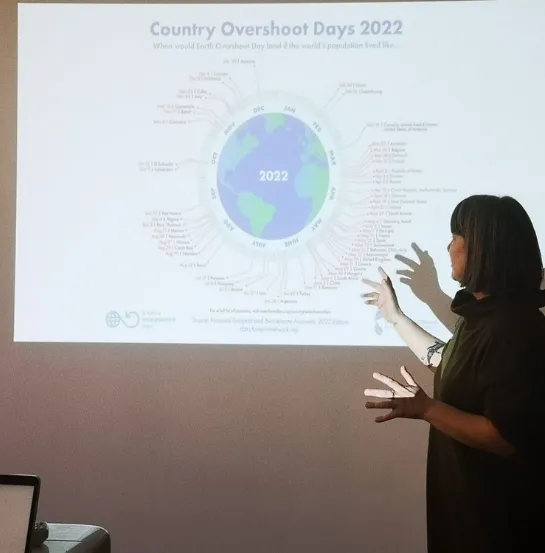
Understanding Earth Overshoot Day is the first step. True transformation happens when teams internalize the data and change their daily habits.
How to prepare your team for CSRD and ESG reporting with FUNDAE training
The European Corporate Sustainability Reporting Directive (CSRD) is transforming how companies document and communicate their environmental and social impact. Starting in 2025 and 2026, thousands of Spanish SMEs will be required to report through their supply chains, joining large companies already obligated to do so.
The good news is that FUNDAE training can cover precisely the skills required by this new regulatory framework, without impacting the company’s training budget. The most in-demand subject areas include:
📑 Dual materiality
Identify which sustainability issues are relevant from the perspective of the company’s impact on the environment and from the perspective of financial risks and opportunities.
📐 ESRS Standards
To understand the European Sustainability Reporting Standards in order to structure information according to external verification requirements.
♻️ Applied circular economy
Reducing waste, extending the lifespan of materials, and redesigning processes to meet the environmental indicators of ESG reports.
💬 Impactful Communication
Draft credible sustainability reports aligned with GRI or SASB, avoiding greenwashing and passing third-party audits.

The CSRD requires companies to report their environmental impact. Prepare your team with specialized training in sustainability and ESG criteria, subsidized by FUNDAE.
Circular economy in the workplace: from awareness to real habit change
One of the most common mistakes in corporate sustainability programs is confusing information with transformation. Knowing that you have to recycle is not the same as doing it systematically, and putting up a sign next to the recycling bins won’t change the habits of a team of 80 people.
FUNDAE’s training in effective circular economy works on three simultaneous levels:
Level 1 · Systemic Understanding
- The 9R framework: rethink, reduce, reuse, repair, remanufacture, recycle…
- The real impact of office, event and hospitality waste on the global system.
- The difference between recycling and circularity: why simply separating properly is not enough.
Level 2 · Practical Tools
- Waste audit: how to measure, categorize and reduce what your company generates.
- Management of reusable containers and circular packaging in events and catering.
- Suppliers and supply chain: sustainable purchasing criteria.
Level 3 · Culture and habits
- Team building activities with real impact (showcookings, beach cleanups, workshops).
- Implementation of measurable internal challenges with monitoring indicators.
- Internal communication: how to involve the entire staff, not just the CSR department.
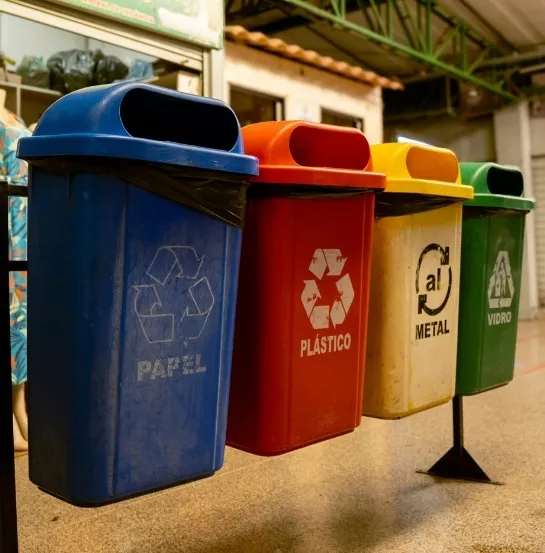
Proper retraining starts with knowing the rules. And accessing FUNDAE training also has its requirements. We’ll explain them all.
FAQs
Yes. Companies with 1 to 5 employees can receive a 100% subsidy on their Vocational Training contributions, and those with 6 to 9 employees can receive a 75% subsidy. In addition, there are individual training permits that expand the possibilities. For micro-enterprises, the most common option is to join a group training initiative organized by an entity like Go Zero Waste, which brings together participants from different companies and shares the organizational costs.
No. Subsidized training is available in face-to-face, distance learning (100% online), and hybrid formats. Online courses must meet specific platform and progress tracking requirements. At Go Zero Waste, we offer all three formats and adapt to the availability and geographical distribution of each client company’s team.
In that case, the company loses the subsidy corresponding to that specific participant, but it does not affect the others. The company will have to return the subsidy amount for that participant if it had already been applied. Therefore, it is important to ensure that enrolled employees have sufficient time to complete the program before notifying FUNDAE.
It depends on the format and structure. A purely team-building activity (without verifiable learning objectives, assessment, or teaching materials) is not eligible for FUNDAE training funding. However, if the activity is designed as a training program with defined competencies, educational content, and a monitoring system—such as certified circular economy workshops—it may be eligible for funding.
The company applies the bonus directly to the monthly Social Security contribution statement (form TC1) the month after the course ends. There’s no need to wait for any prior approval: the system works by direct compensation. The entire process—from notification of the start date to the application of the bonus—usually takes 4 to 8 weeks, depending on when the training ends within the month.La empresa aplica la bonificación directamente en la liquidación mensual de cuotas a la Seguridad Social (modelo TC1), el mes siguiente a la finalización del curso. No es necesario esperar a ninguna resolución previa: el sistema funciona por compensación directa. El proceso completo —desde la comunicación del inicio hasta la aplicación de la bonificación— suele cerrarse en un plazo de 4 a 8 semanas dependiendo de cuándo finalice la formación dentro del mes.
FUNDAE-subsidized courses generate a diploma or certificate of participation issued by the organizing entity. These are not equivalent to university degrees or SEPE professional certificates, but they do provide proof of training for clients, ESG auditors, and public administrations. At Go Zero Waste, we include a certificate of completion in all our programs, detailing the content, hours, and skills acquired.
Summary and conclusions
FUNDAE sustainability training is not an expense, it’s an investment already partially or fully funded by your company’s monthly social security contributions. In a context where regulatory pressure (CSRD, green taxonomy, sustainable public procurement) and the demands of clients and talent are pointing in the same direction, training your teams in circular economy and environmental management offers both reputational and operational returns.
✅ Universal access for SMEs: any company that pays into Vocational Training and is up to date with Social Security and the Tax Agency can receive funding for sustainability training, regardless of its size.
✅ The credit does not automatically expire: if you don’t use your annual credit, it is lost at the end of the fiscal year. Sustainability training is a cost-effective way to use it while making a real impact.
✅ Flexible formats: from 4-hour workshops to 80-hour programs. The key is choosing the right duration for the organization’s level and the program’s actual objectives.
✅ The CSRD is here: anticipating the mandatory sustainability report with FUNDAE training saves consulting costs and positions the company ahead of the regulations.
✅ Changing habits, not just raising awareness: a good program works on three layers — systemic understanding, practical tools and internal culture — to produce measurable results.
✅ Administrative management can be outsourced: the training entity can handle notifying FUNDAE about the course, thus eliminating the bureaucratic burden for the HR department
💡 Do you want to apply this in your company?
At Go Zero Waste, we support companies of all sizes—from startups to large corporations like KPMG or Amadeus—with FUNDAE-certified programs tailored to your specific needs and focused on concrete results. Check out our sustainability training courses or book a free call with our team.

Magda Cebrián
Environmental consultant and impact entrepreneur, based in Barcelona and specializing in sustainability, zero waste and circular economy.
- Corporate sustainability
- Circular economy
- Environmental education
- Zero waste projects
- ESG & CSRD Reports
News related

What is plogging: sport, environmental awareness and community in action
Blog 06/18/2026 Magda Cebrián ¿Y si cada vez que salieras a correr pudieras dejar el mundo un poco más limpio de lo que lo encontraste? Eso es exactamente lo que…
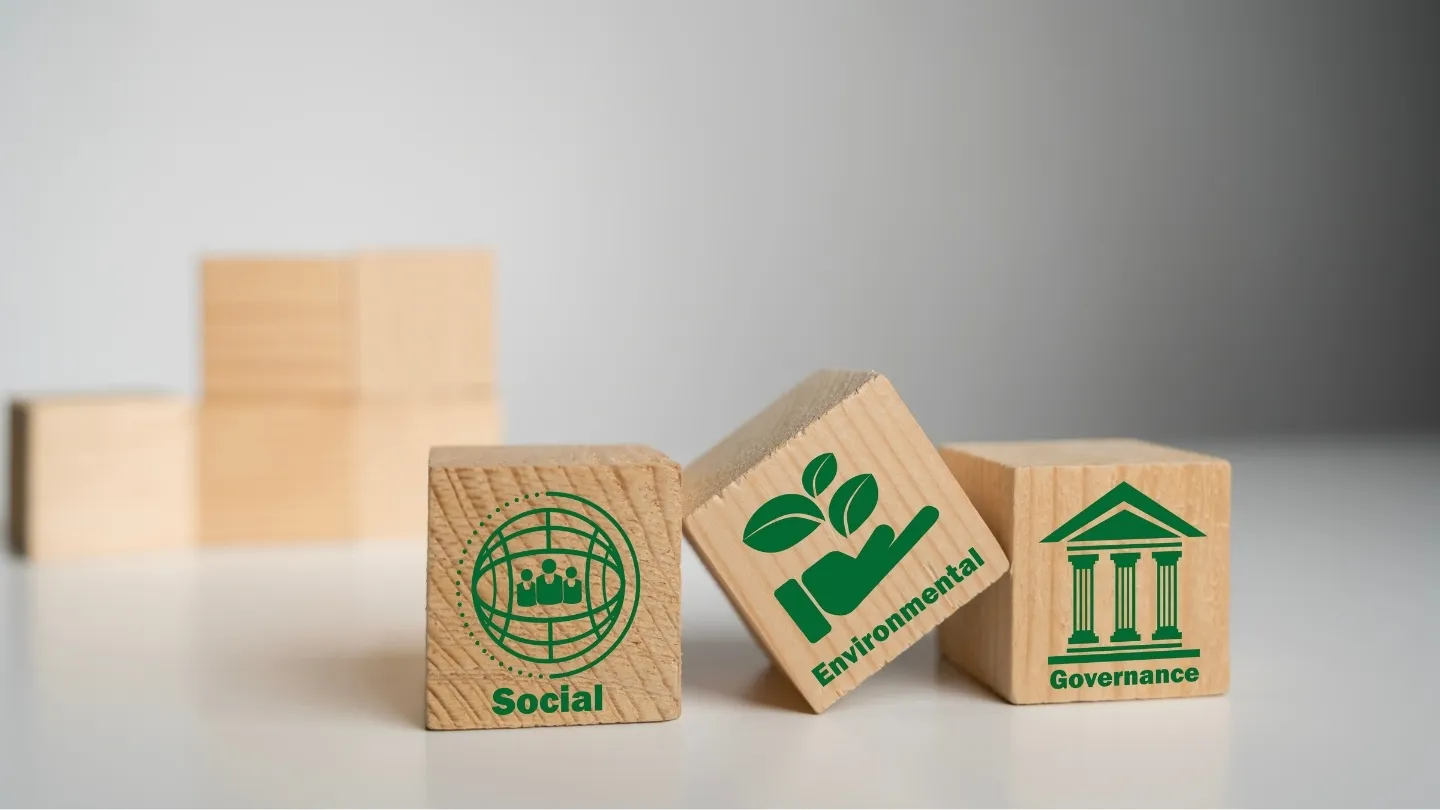
What is ESG? A complete guide to environmental, social, and governance criteria
Blog 06/01/2026 Magda Cebrián Corporate sustainability has moved beyond being a trend to become a strategic necessity. Investors, customers, employees, and public administrations are increasingly demanding transparency regarding how organizations manage their environmental,…

What is a zero-waste lifestyle?
Zero Waste is a movement that seeks to minimize our environmental footprint, not only by recycling, but by preventing waste from being generated in the first place. It is based…