

- Blog
- Good practices
- Five most in-demand sustainability and environmental training topics for companies
Five most in-demand sustainability and environmental training topics for companies
- 07/14/2026
- Magda Cebrián
LinkedIn notes that talent with green skills grew by 4.3% globally, but hiring is progressing at a much faster pace.
Browse through the publication
Circular economy and waste management
It is, without a doubt, the star topic. The transition from the linear “produce, use, and discard” model to a circular model affects every department in a company, from purchasing and logistics to product design and offices.
What this training includes:
- Fundamentals of the circular economy and the 9R framework (refuse, rethink, reduce, reuse, repair, refurbish, remanufacture, recycle and recover).
- Proper waste segregation in the workplace and why it fails so often.
- Identification of waste flows specific to each sector and opportunities for valorization.
- Practical examples of applied circularity: reusable packaging, circular purchasing, industrial symbiosis.
Who is it ideal for?
• Operations teams, facility management, purchasing, and, in general, all staff when the objective is to reduce waste generation at the facilities. It is also the standard basic training when the company is working towards ISO 14001 certification or wants to conduct a waste audit.
The key topic: circular economy and waste management. The training with the most tangible and immediate return for any company.
Why companies demand it:
• Because it has a tangible and immediate return. A trained workforce segregates waste better, reduces waste management costs, and detects inefficiencies that no one had noticed before.
Carbon footprint and decarbonization
Measure to reduce. The carbon footprint has become the quintessential environmental indicator, and more and more companies need their teams to understand what it is, how it is calculated, and, above all, how to reduce it.
What this training includes:
- Key concepts: scopes 1, 2 and 3, emission factors, CO2 equivalent.
- Introduction to calculating the carbon footprint of organizations, products, and events.
- Reduction strategies: energy efficiency, sustainable mobility, responsible purchasing.
- Emissions offsetting: what it is, when it makes sense and how to avoid greenwashing.
Who is it ideal for?
Sustainability, quality and environment managers, financial teams that must report and middle managers who manage areas with direct impact (fleets, energy, travel).
Why companies demand it:
• The value chain is pushing. Large corporations are requesting emissions data from their suppliers (the famous Scope 3), so even SMEs that are not required to report end up needing training to respond to these requirements.
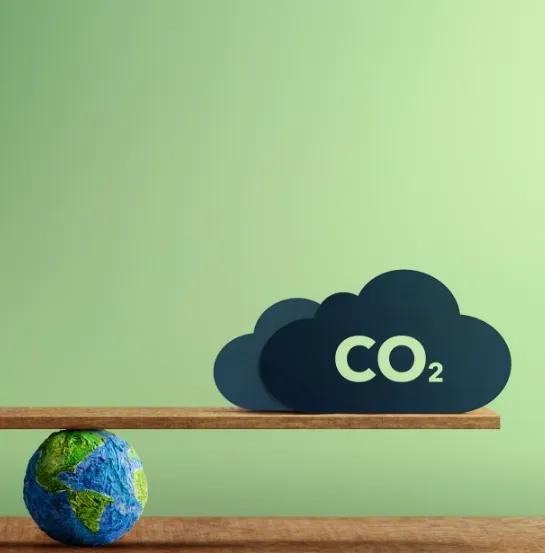
Measure to reduce. Carbon footprint is no longer just a metric for large corporations: more and more companies need trained teams to calculate and reduce it.
ESG criteria and sustainability reporting (CSRD)
European regulations have placed sustainability reporting on the agenda of management committees. The CSRD directive and ESRS standards require verifiable environmental, social, and governance (ESG) information, and this necessitates trained personnel within the organization.
What this training includes:
- What are ESG criteria and how do they translate into daily management?
- Regulatory framework: CSRD, ESRS, European taxonomy and due diligence.
- The concept of dual materiality and how to apply it.
- First steps to develop a credible and useful sustainability report.
Who is it ideal for?
General management, finance, legal, HR and communications teams. It is the most cross-cutting training at the management level and the one that has grown the most in demand in recent years.
Why companies demand it:
Because sustainability is no longer just about reputation, but also about regulation and finance. Access to public tenders, bank financing, and contracts with major clients increasingly depends on strong ESG performance.
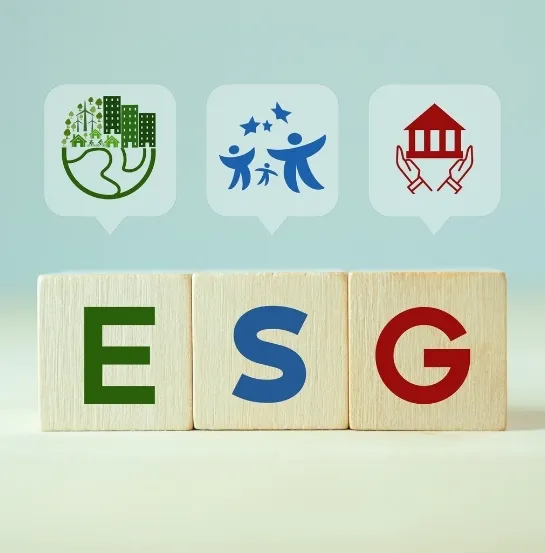
CSRD is no longer just for large companies. Teams need to understand ESG criteria to report, access funding, and win bids.
Responsible consumption and sustainable office (zero waste culture)
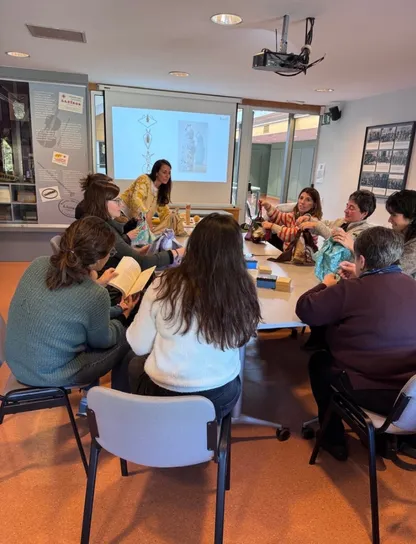
This is the kind of training that transforms internal culture. It addresses the team’s daily habits: what we buy, how we use it, and what we waste. It’s practical, approachable, and often serves as the entry point for many companies into environmental training.
What this training includes:
- Principles of the zero waste movement applied to the work environment.
- Reducing single-use plastics, paper, and food waste in the office.
- Responsible purchasing and procurement: environmental criteria in suppliers and office supplies.
- Digital best practices: the hidden environmental footprint of email, the cloud, and devices.
Who is it ideal for?
The entire staff, without exception. It works especially well in a participatory workshop or resourceful showcooking format, where learning is experienced firsthand.
Why companies demand it:
Because it generates engagement. Teams appreciate training that is also useful in their personal lives, and the company ensures that sustainability goes from being just a paragraph in the annual report to becoming visible behaviors.
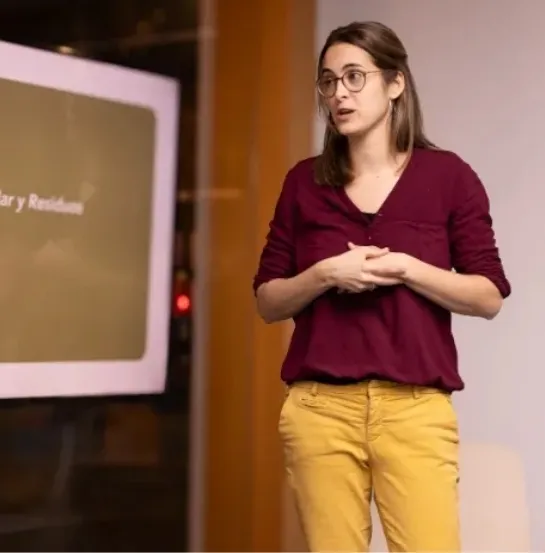
A zero-waste culture begins with small, everyday actions: what we buy, how we use it, what we waste. And it’s something we learn.
Experiential environmental awareness: team building and corporate volunteering
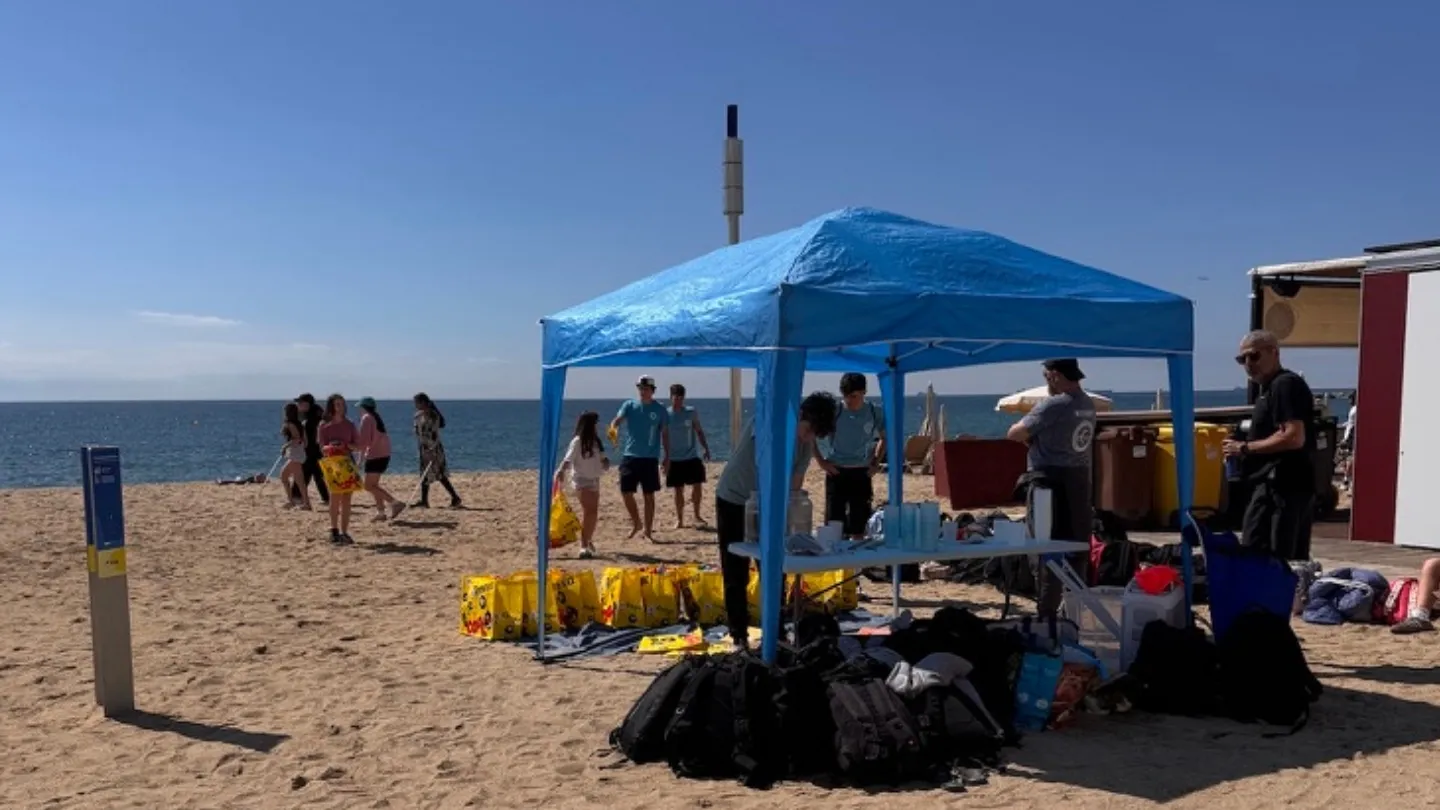
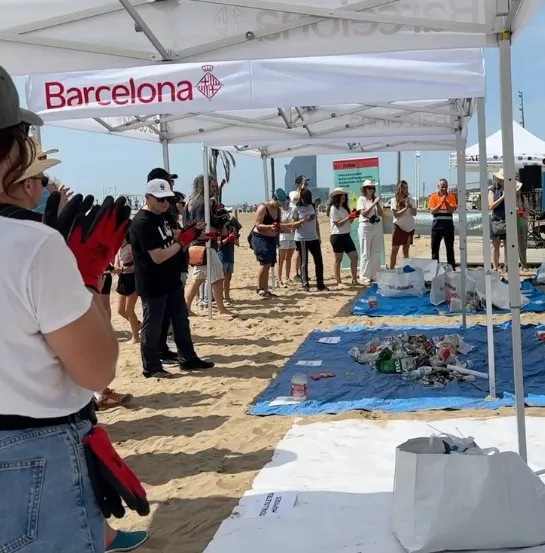
The latest major trend is not classroom-based training, but action-oriented training. Companies are looking for experiences that combine environmental learning, team cohesion, and real-world contribution to the environment: beach and natural area cleanups, repair and reuse workshops, and gamified sustainable challenge activities.
What this training includes:
- Environmental volunteering activities with measurable impact (waste collected, characterization of marine litter).
- Sustainable team building with cooperative dynamics and experiential learning.
- Gamified sustainability challenges to maintain motivation beyond the specific event.
- Connecting the experience with the company’s ESG and CSR objectives.
Who is it ideal for?
The entire staff, without exception. It works especially well in a participatory workshop or resourceful showcooking format, where learning is experienced firsthand.
Why companies demand it:
Because what we experience is remembered. A morning collecting trash on a beach teaches more about the plastic problem than many hours of theory, and it also strengthens team spirit and a sense of belonging.
Learning by doing. Experiential environmental awareness transforms team consciousness into real and measurable action.
FAQs
Much of this training can be free or very low-cost. Companies with employees in Spain have access each year to a training credit managed through FUNDAE, which allows them to deduct the cost of their employees’ training from their Social Security contributions. At Go Zero Waste, we are an organizing entity, so we take care of all the administrative procedures to ensure your company can use its training credit for sustainability and environmental training without any hassle.
Summary and conclusions
The future of business will be sustainable, or it won’t exist at all. Investing in environmental training for teams not only reduces operating costs and improves brand reputation, but also fosters a shared purpose that retains talent and transforms the environment.
At Go Zero Waste, we believe that knowledge is the most powerful tool for driving change. Through technology, gamification, and training, we help companies and institutions transform sustainability goals into everyday, measurable actions.
✅ The circular economy and waste management is the most in-demand topic because it offers a tangible and immediate return: equipment that segregates better, lower management costs and detection of operational inefficiencies.
✅ Regulatory pressure drives technical training. Carbon footprint and ESG/CSRD criteria have gone from being specialist topics to cross-cutting needs: the value chain demands data and European regulation requires trained teams, including in SMEs.
✅ Cultural change requires experiential formats. Training in responsible consumption and experiences such as sustainable team building or environmental volunteering generate engagement and transform sustainability into visible behaviors, not just a paragraph in the annual report.
✅ The investment is less than it seems. Thanks to FUNDAE’s training credit, much of the sustainability and environmental training can be subsidized through Social Security contributions, resulting in zero or very low cost for the company.
💡 Do you want to train your team in sustainability?
At Go Zero Waste we design customized sustainability and environment training programs: from circular economy workshops to sustainable team building, eligible for FUNDAE funding.
Book a free 20-minute call and we’ll suggest the most suitable training plan for your company.
Magda Cebrián
Environmental consultant and impact entrepreneur, based in Barcelona and specializing in sustainability, zero waste and circular economy.
- Corporate sustainability
- Circular economy
- Environmental education
- Zero waste projects
- ESG & CSRD Reports
Related projects
Astra Zeneca
Blog 04/23/2026 Magda Cebrián Client Astra Zeneca AstraZeneca is an Anglo-Swedish pharmaceutical powerhouse that leads in sustainability by moving from promises to real data. They are a benchmark for three…
Workshop on Culture of reuse and exchange for the Mútua dels Enginyers
Go Zero Waste conducted a workshop for Mutua dels Enginyers focused on the culture of reuse and exchange, promoting sustainable habits and the circular economy among its employees.
Moving Towards Zero zero with Secartys
The "Moving Towards Zero" campaign with Secartys promotes business sustainability through gamified challenges in a mobile application, encouraging zero waste habits, responsible consumption and rewarding ecological commitment.