
Leftover cooking workshop for KPMG
- 06/04/2025
- Magda Cebrián
Client
KPMG
KPMG is one of the world’s largest professional services firms, known as part of the “Big Four,” offering audit, tax, and consulting services. It operates in more than 140 countries and works with thousands of companies, governments, and non-profit organizations.
KPMG has taken an active role in the transition to a more sustainable economy, both internally and externally. Its approach to sustainability is articulated through carbon footprint reduction, corporate sustainability advice, transparency and sustainable reporting, and sustainability education.
Goals
SDG 11 | Cities and comunities
sustainable
Encourage culinary creativity
We reinvent dishes, take advantage of all the ingredients and all their parts, and achieve innovative results.
ODS 12 | Producción y
consumo responsables
Social connection and teamwork
It is a participatory activity so in addition to the person who cooks there are always volunteers who can help and learn firsthand.
ODS 13 | Acción por el clima
Moving to post-workshop action
After the workshop, we sent everyone who attended the workshop the recipes we made and several actions they can take at home to reduce kitchen waste.
What was done?
In this cooking workshop, we created three recipes to reduce the waste we generate when cooking and create new flavors.
1.- Hazelnut vegetable drink where the hazelnut okara was also reused to create energy balls.
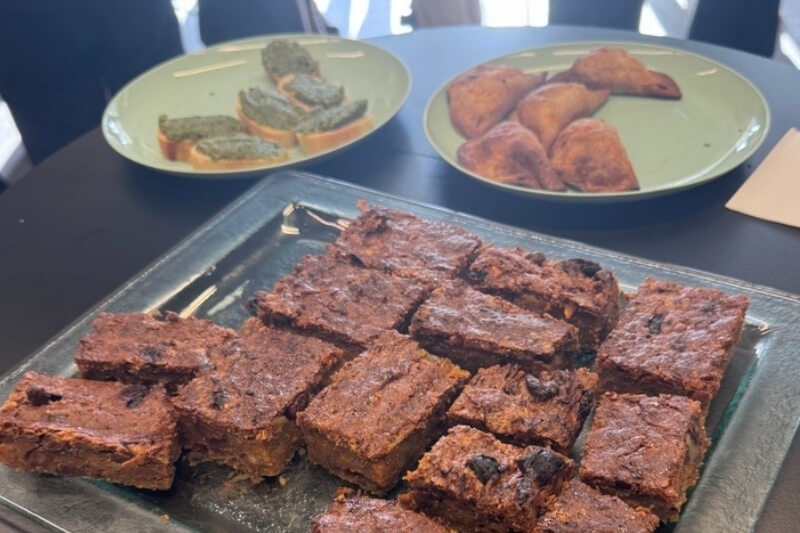
2.- Carrot leaf pesto with which we take advantage of a part that is normally removed from the carrot and thrown away directly,
After the workshop, we offered the participants the following dishes: Bonito, egg, and asparagus empanadas. The bonito meat is extracted from between the bones. Empanadas are a recipe that uses leftovers par excellence. Rigatoni with wild herb ragù. Broth made from onion bones and skins. Tart made with limp carrots that we soaked in cold water in the refrigerator and made them hard again. We also used the skins and leaves for this recipe to make the pesto.
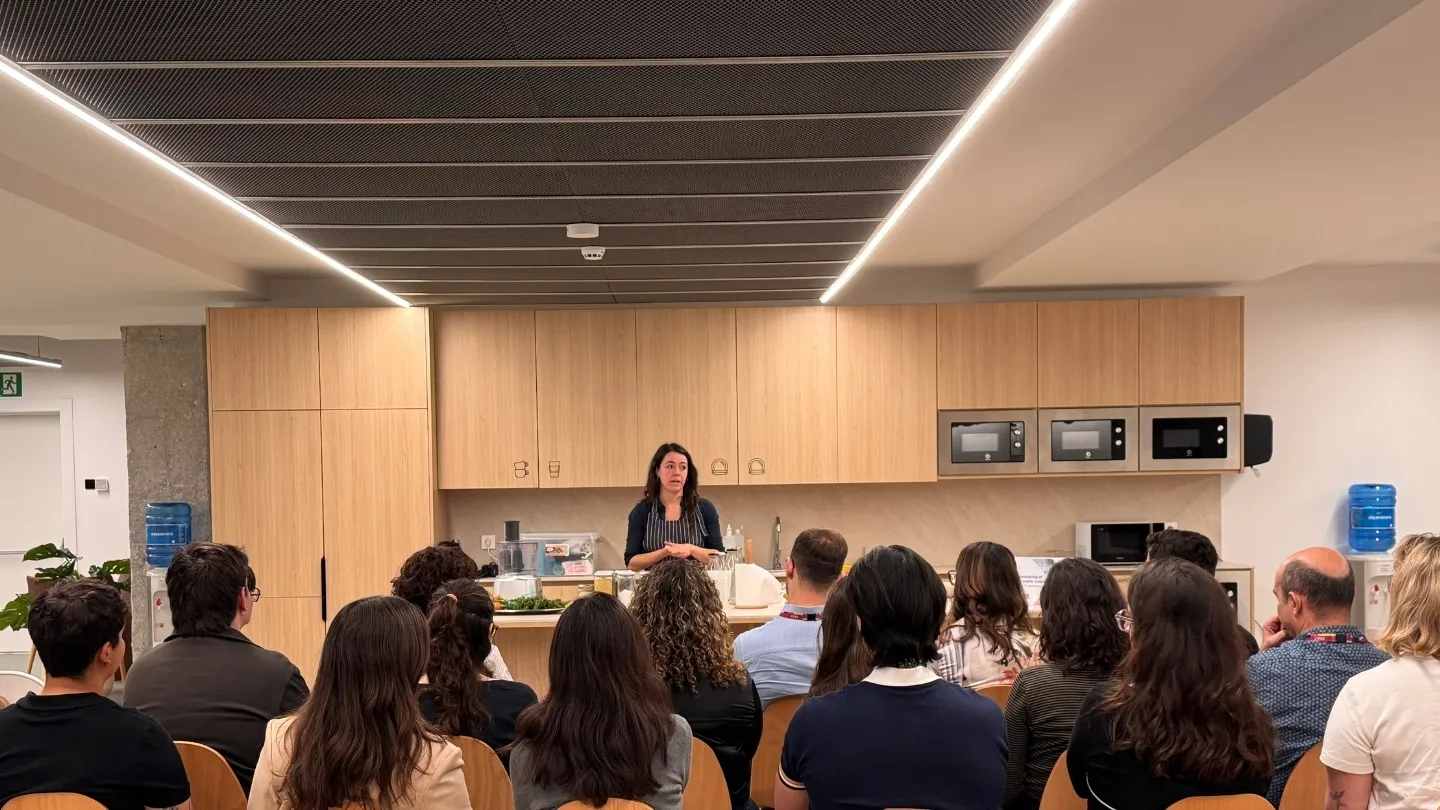
Chef Berta conducting the leftover cooking workshop
Why a leftover cooking workshop?
✅ Generating a real, positive impact on people is fundamental to us. Through cooking, we can help reduce food waste , as tons of perfectly good food are thrown away every year.
✅ Promote habit changes : Leftover cooking reduces the carbon footprint and environmental impact of food consumption. With this workshop, we encourage changing habits both at home and at work.
✅ Strengthens SDG 12, which addresses responsible consumption and climate action (SDG 13).
✅ It fosters teamwork and creativity. Our workshops are always participatory and inclusive . Anyone who wants to can participate and contribute their part.
✅ Inspire beyond the workplace. We turn people into agents of change , enabling them to share what they’ve learned with their families and close circles.
Related news
Waste to Resource Talk for Ritsumeikan University
The talk "From Waste to Resource," held for students at Ritsumeikan University, a leading Japanese institution in sustainability, aimed to inspire the next generation to adopt a Circular Economy mindset.
Waste audit for Calmell Group
Through planning, collection, and analysis in its industrial warehouses, the company developed an implementation plan in coordination with its teams, fostering sustainable improvement dynamics. This audit reinforces its commitment to efficiency, regulatory compliance, and environmental footprint reduction.
Food waste training for Hotel Tarida Beach Resort & Spa
Insotel Group strengthens its environmental commitment by implementing the Effiwaste system to reduce food waste. With the support of Go Zero Waste, hotel staff were trained in sustainability, current regulations, and practical strategies for measuring, analyzing, and reducing waste, aligning with SDGs 11, 12, and 13.