
Food waste training for Hotel Tarida Beach Resort & Spa
- 09/29/2025
- Magda Cebrián
In collaboration with:
Insotel Group is a family-run hotel group with over 50 years of experience in the Balearic tourism sector. All of its hotels have environmental certification (ISO 14001) and the “Be Blue” seal, with beach cleanup campaigns and support for marine conservation projects. On this occasion, they have implemented the Effiwaste system, which improves waste management, and Go Zero Waste collaborated by training hotel staff.
Goals
SDG 11 | Cities and
sustainable communities
Environmental awareness
Knowing the importance of the food we waste
SDG 12 | Production and
responsible consumption
Identify the causes and critical points
Understanding where waste occurs and why
SDG 13 | Climate Action
Learn practical solutions
Show the benefits of the system and also other success stories that exist around the world.
What was done?
Before installing the Effiwaste system, training on food waste was provided , covering the following points:
1.- Context and problem:
· 30% of the food grown in the world ends up as waste
· Tourism accounts for 9.2% of global GDP and 8.8% of greenhouse gas emissions.
· The HORECA channel (hotels, restaurants and catering) is responsible for 15-20% of global waste.
A 4-star, all-inclusive hotel with 1,200 guests can generate up to 900 kg of waste per day from food alone.
2.- Sustainability in the hotel sector
· Key actions: reduce emissions, optimize energy and water consumption, improve waste management, and use local suppliers.
· In gastronomy: the challenges are local production, packaging, energy consumption in the kitchen, and food waste.
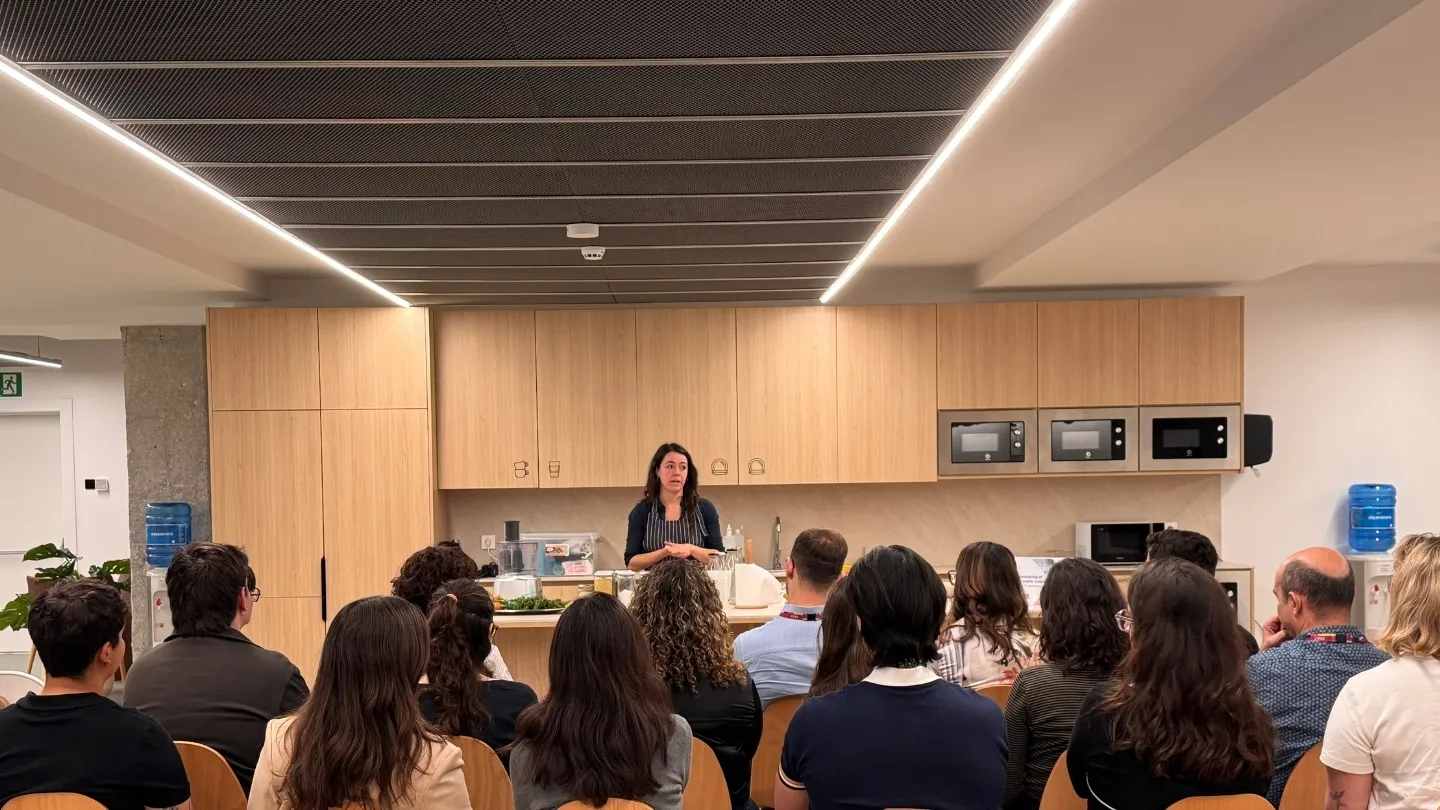
Sala donde se realizaó la formación
3.- Regulations and legislation
· Law 7/2022 on waste and contaminated soils for the circular economy
· New law against food waste:
- Reduce food waste per capita by 50% by 2030.
- Mandatory prevention and quantification plans
- Donation of surpluses to social entities
- Offer takeout containers
- Apply the hierarchy of prevention, reuse, recycling, recovery and disposal
4.- Causes and reduction strategies
· Overproduction and poor stock management
· Measure and analyze waste by food type, service, and reason.
· Encourage show cooking and individual portions
· Valorize unavoidable waste (composting, biogas, bioproducts).
Why a training on food waste?
The training we provide seeks to raise awareness in the hotel industry about the impact of food waste. We explain current regulations and present practical and technological tools available on the market to measure, analyze, and reduce waste, improving sustainability and profitability.
✅ One-third of the food produced worldwide ends up in the trash: the hotel industry can make a difference.
✅ The new law against food waste requires hotels and restaurants to prevent, measure, and donate their surpluses.
✅ Reducing waste is not only sustainable: it improves profitability and optimizes resource management.
✅ Training in circular gastronomy and Zero Waste is key to responding to more conscious and demanding customers.
News related
Paasiot – IoT collector device
Go Zero Waste presents an IoT collector for containers, cups, and bags that facilitates and gamifies reuse in the retail and HoReCa sectors.
Microgreen team building for Ecovadis
GoZeroWaste offers a microgreens team-building activity that transforms sustainability into group action. This hands-on experience boosts team cohesion and improves EcoVadis scores through environmental commitment.
Showcooking demonstration of resourceful cooking for Allianz
Go Zero Waste organized a resourceful cooking workshop for Allianz employees, focused on reducing food waste. During the demonstration, participants learned practical techniques and creative recipes to transform leftovers into…