¿Qué es el furoshiki?

What is furoshiki?

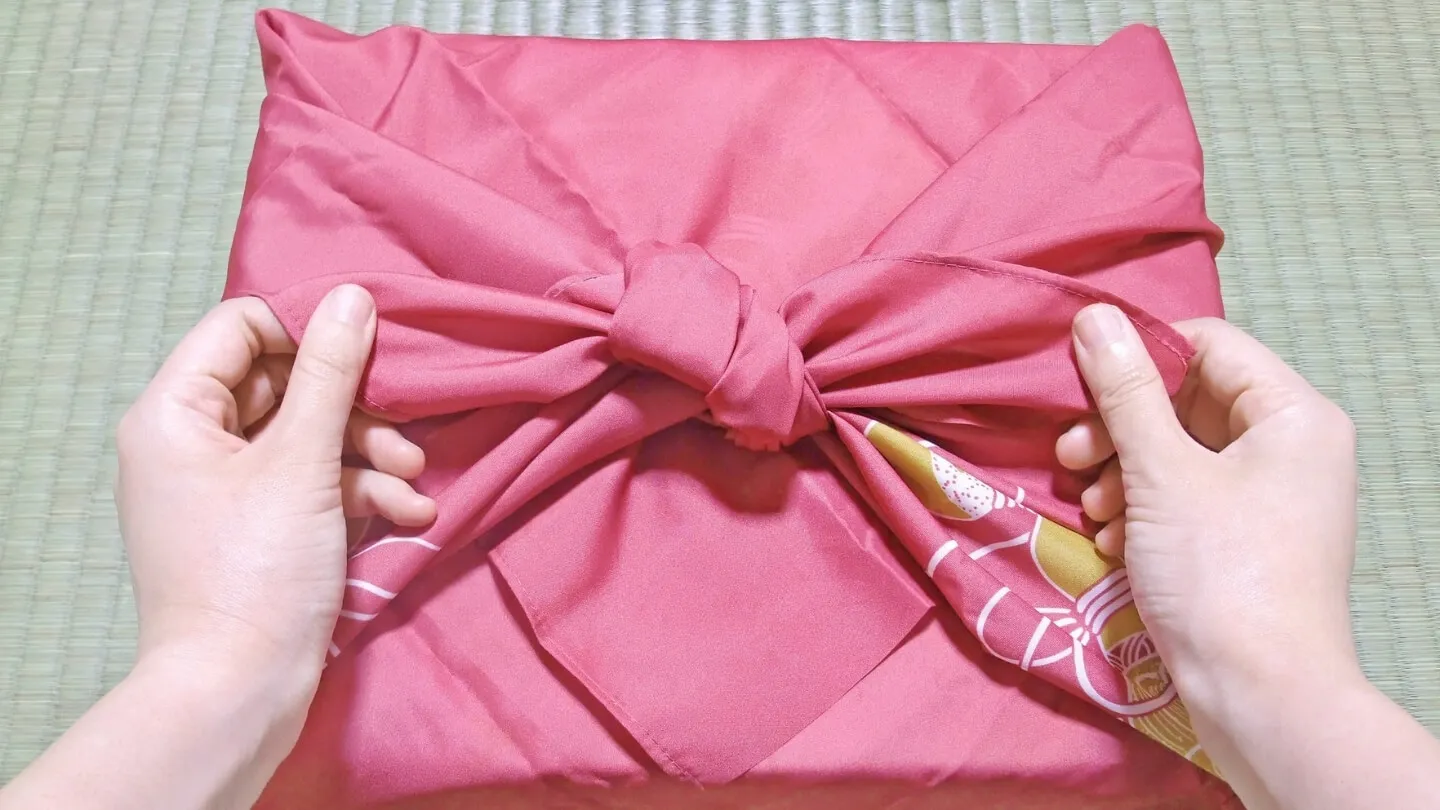
Furoshiki is an ancient Japanese technique for wrapping objects in a cloth. Originating in public baths, it evolved into a versatile form of transport. Today, it's a sustainable, zero-waste alternative to wrapping paper, combining functionality, beauty, and environmental responsibility by being completely reusable.

Browse through the publication

1

What is furoshiki and what is it used for?

The origin of the word dates back to Japanese public baths 

📜 The origin: 

The term Furoshiki is a combination of two words: Furo (bath) and Shiki (to cover). In the 14th century, people began using cloths to wrap their clothes while bathing and also spread them on the ground to change on. This way, they could identify and keep their clothes clean in a communal space. 

🛍️ Evolution : From bathrooms to commerce. 

With the rise of trade, furoshiki was adopted to transport products, as it was very versatile and resistant, allowing anything to be carried. 

The act of wrapping carefully became a sign of respect for the object and the recipient. 

✨ Current events:  

Furoshiki teaches us that the best wrapping is the one that isn’t thrown away. It’s a perfect combination of functionality, beauty, and respect for the environment.

¿Qué es el furoshiki y para qué se utiliza?

The origin of furoshiki, a cloth that was wrapped around clothes while bathing in Japanese public baths.

2

How to choose your Furoshiki

Choosing the right furoshiki is easy when you know what to consider. Here’s a clear guide to help you pick the best furoshiki. 


Size: the key to making it work well


· For small and compact gifts, a size of 45×45 cm can be chosen.

· For books and medium-sized objects, it is best to choose sizes of 50x50cm. 

· For clothes, medium boxes and individual bottles, a size of 70×70 cm can be chosen.

· For large gifts, it is best to opt for 120×120 cm fabrics. 

The rule of thumb is to choose a size that is 3 times larger than the item you are going to give as a gift. 

Cómo elegir tu Furoshiki

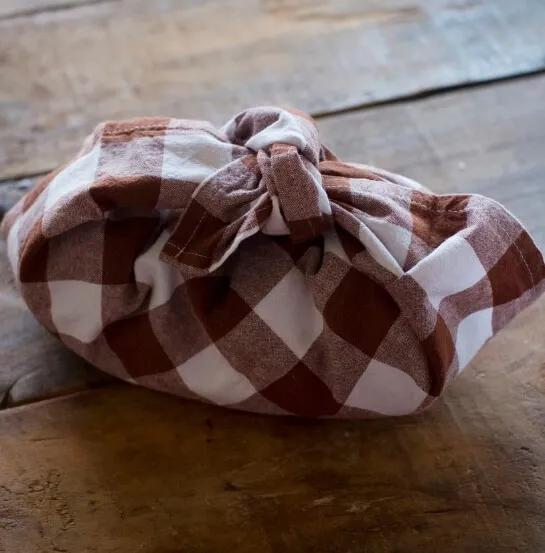
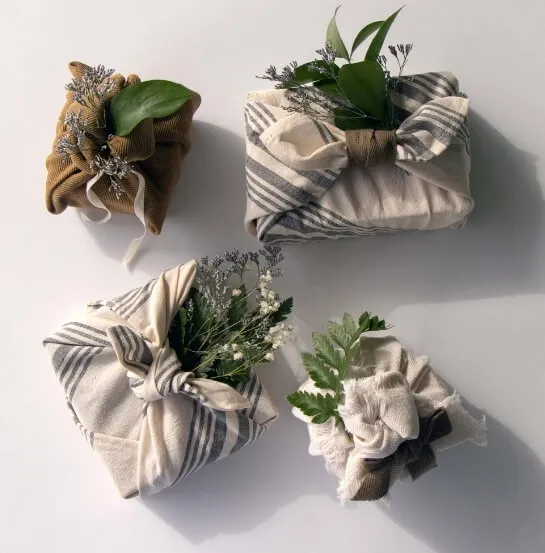
Each gift can have its own furoshiki.

Material: aesthetics and functionality

Each tissue behaves differently. 

Cotton is durable, easy to wash, and has a good grip. It’s ideal for small gifts  .

· Silk is soft, elegant and very eye-catching, although it is more delicate. 

Linen has a natural  strong texture. A great option for minimalist or eco-friendly styles. 

• A good tip: if you are going to make knots that must support weight, cotton or linen is preferable. 

Beyond the packaging, the design of the handkerchief

In Japan, traditional prints have an intrinsic meaning. 

· The hemp leaf signifies growth and protection. 

· Blue waves signify good fortune and continuity. 

· The turtle shell signifies longevity. 

3

Zero-waste gifts: Why Furoshiki is the zero-waste alternative to wrapping paper

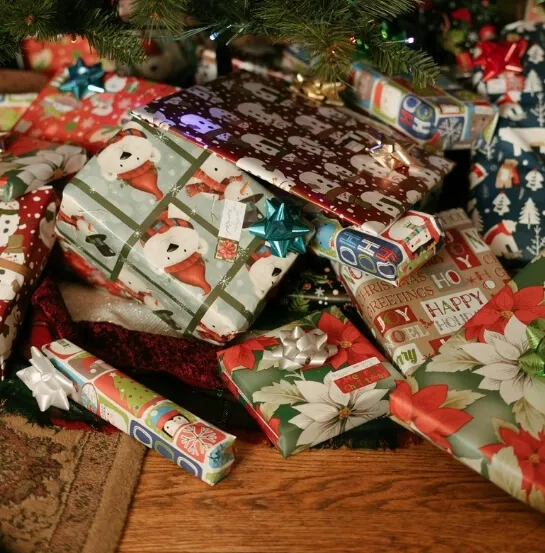
Anniversaries and Christmas celebrations have one thing in common: they generate a mountain of torn wrapping paper and strips of tape that are very difficult to recycle. During the holiday season, wrapping paper contributes tons of waste that ends up directly in landfills. 


The Furoshiki, the wrapping that lasts forever


The great advantage of furoshiki is its infinite reusability. Unlike paper, which tears and is thrown away, the cloth remains intact. 

If the furoshiki is given as part of the gift, the recipient can use it to wrap future gifts. This greatly extends the lifespan of the wrapping. 

Furthermore, if at the end of all the exchanges the fabric breaks and is of natural origin (such as cotton or linen) it is biodegradable and will not leave microplastics. 

Regalos sin residuos_ Por qué el Furoshiki es la alternativa residuo cero al papel de regalo

Wrappers that will become non-recyclable waste. 

4

Summary and conclusions

Furoshiki is a traditional Japanese technique for wrapping objects using a cloth. Its name comes from the combination of the words furo (bath) and shiki (to cover), as it was originally used in the 14th century in public baths to wrap clothes and serve as a mat. With the evolution of trade, it was adopted for transporting goods due to its versatility and durability, becoming a sign of respect for both the object and the recipient. Today, furoshiki is a functional, aesthetic, and sustainable alternative to disposable wrapping paper, aligning with the zero-waste philosophy as it is infinitely reusable and, if made of natural materials, biodegradable.

✅ Sustainability and Waste Reduction: Furoshiki is a fundamental alternative to disposable wrapping paper, plastic bags, and hard-to-recycle ribbons. Being made of fabric, it is infinitely reusable , drastically reducing waste generation and promoting a circular economy.

✅ Practical Versatility: The same fabric can be used to wrap objects of any shape or size (bottles, books, irregular boxes), and can even be used as an improvised bag for carrying things. Its functionality goes far beyond simple gift wrapping.

✅ Aesthetic and Personal Touch: Furoshiki elevates the presentation of any gift or package, offering a much more elegant and memorable wrapping than paper. Furthermore, the cloth itself can be part of the gift or convey a special message through its colors or traditional Japanese patterns (such as good fortune or longevity).

✅ Durability and Strength: Unlike paper, which tears and is immediately thrown away, Furoshiki fabric is strong. This ensures that the contents are well protected during transport and that the wrapping remains intact for repeated use.

Related news

What is furoshiki?

Furoshiki is an ancient Japanese technique for wrapping objects in a cloth. Originating in public baths, it evolved into a versatile form of transport. Today, it's a sustainable, zero-waste alternative…

Creative ideas for a local business campaign in small towns

A creative local commerce campaign promotes conscious consumption and the circular economy through routes, maps, and gamified challenges. It encourages buying locally, minimizes waste, and strengthens neighborhood identity. Through stamps,…

What is solidarity team building?

Community-based team building combines team activities to strengthen communication and cohesion with a positive social or environmental impact. It increases motivation and improves corporate social responsibility (CSR). Examples include reforestation…