
- Blog
- Good practices
- Interview with VasovenGo
Interview with VasovenGo
- 05/05/2023
- Magda Cebrián
Navega por la publicación
When and how did the idea of vasovengo come about?
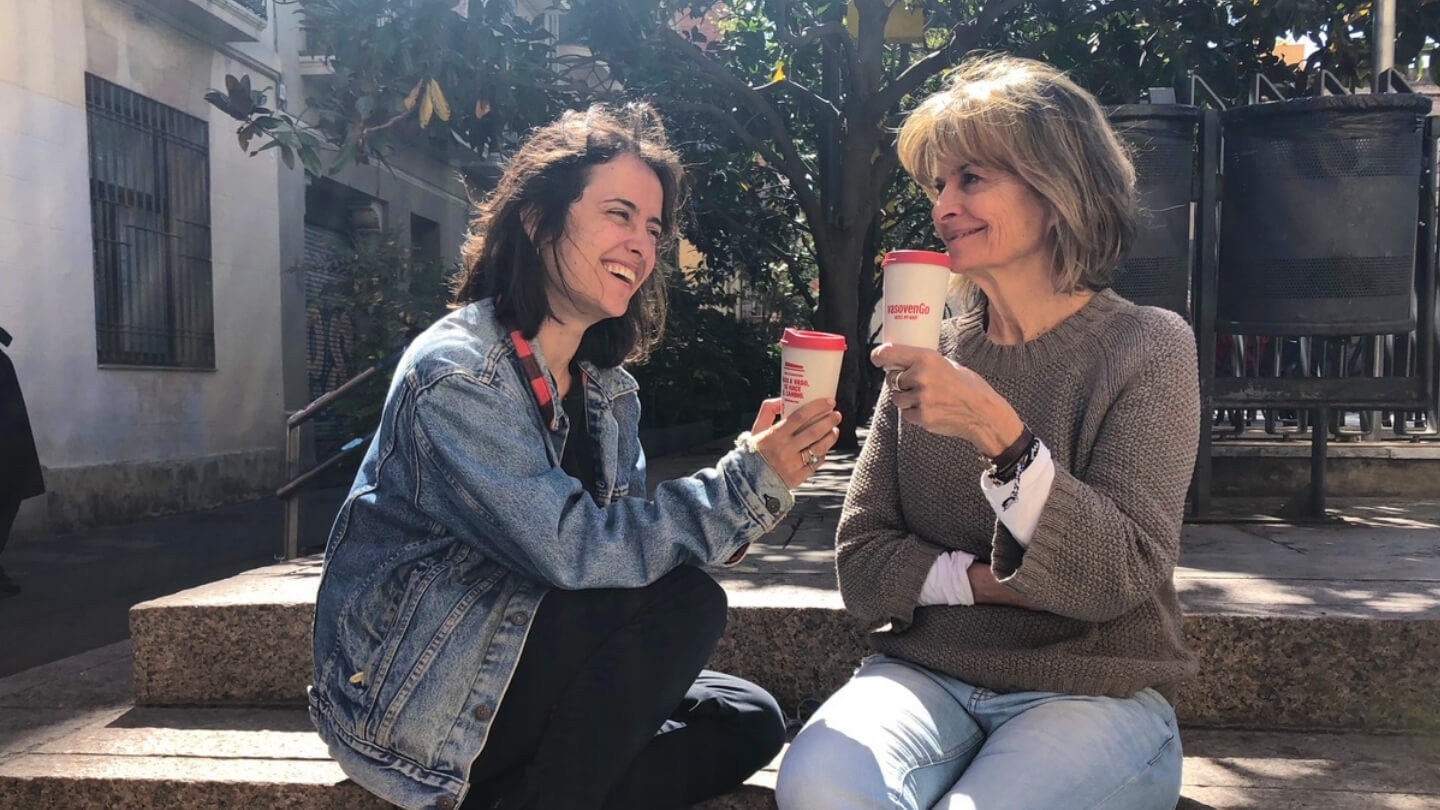
VasovenGo was born in early 2022 during a mother-daughter luncheon, discussing the many bad habits that have led us to this climate crisis and the capabilities we have as designers and entrepreneurs to transform them. It was born from the union of two generations; one that lived a childhood where recycling was normal, and the other that lives the ideal of recovering it. It was born from a shared motivation to do everything in our power to leave a better planet for the generations that follow us.
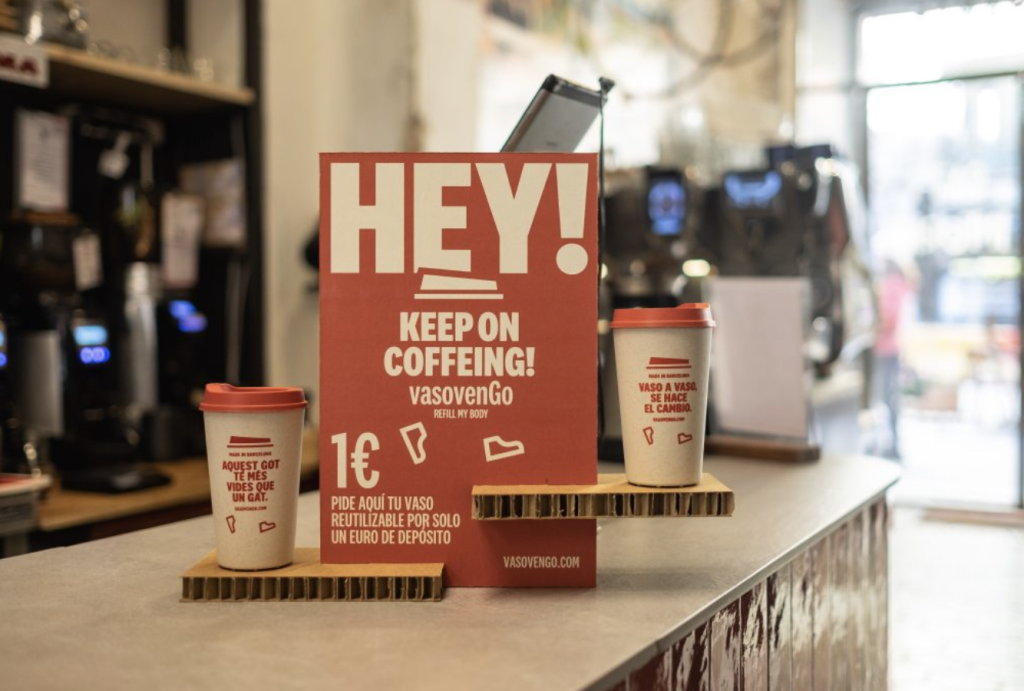
Cartel Vasovengo
Who is your target audience and what value proposition do you offer them?
The main objective of vasovenGo is to help citizens recover the habit of reusing. Setting trends through design and offering an easy-to-use, analog system is our strategy to compete against the convenience of single-use containers. We want to start by addressing the context that consumes the most single-use cups: the coffee industry and specialty coffee shops. Our target audience will be all those establishments that sooner or later have to make the transition to reusing and don’t know how or where to start.
Can you explain why a disposable cup is more sustainable than a single-use cup?
To understand why some products are more or less sustainable, we must question their purpose in life and the reason for which they were designed. What’s the point of creating a cup for drinking coffee that can only be used once, if it’s an activity we repeat daily? If we consider the life cycle of a cup (the extraction of materials, manufacturing energy, gasoline for transport, recovery as waste, and energy for recycling—in the best-case scenario) and we use it to consume only 250ml of beverage in 10 minutes, perhaps something isn’t quite right. Comparing the need for one cup to drink one coffee versus one to drink 200 coffees, the reduction in impact per cup is clear. Therefore, every time we reuse a cup, we reduce its environmental impact, which is what we seek to promote with the vasovenGo reuse system.
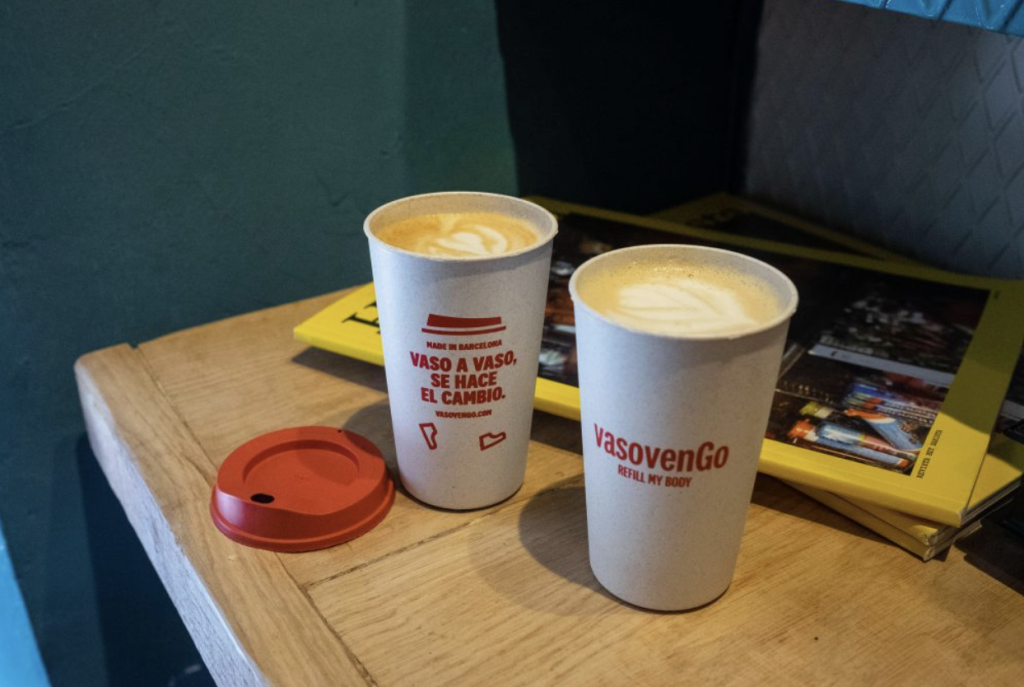
Cups of Vasovengo
Extending product life is key to the circular economy. How many uses can a glass of wine have? And how do you close the loop to minimize waste?
(The first part is answered above)
VasovenGo is a container take-back and return system. The fact that we rent, rather than sell, cups allows us to control the end of life of the containers so that, once they reach their end of life, we can recover them and send them back to our suppliers for recycling and production of new products.
What are the advantages of using rice hulls in manufacturing? And why do you use plastic polymers?
To offer a 100% circular service, we decided to choose the most sustainable suppliers we could find: first, prioritizing local production to avoid unnecessary transportation and emissions, and second, choosing eco-innovative materials. By using 60% rice husks, we are applying one of the principles of the circular economy: using waste as resources. Rice is one of the most consumed foods in the world, and its husk is unfit for any food purpose, both for humans and animals. Using this agricultural waste allows us to optimize the use of plastic, replacing the 60% of polymer we would normally use to produce the same cups.
Do you have any data on the (positive) environmental impact of cup rentals versus single-use cups (in terms of reduced CO2 emissions, recycled plastic, etc.)?
According to environmental studies, reusing a cup 50 times reduces the carbon footprint 10 times compared to a single-use cup.
In which stores can we currently find Vasovengo?
Coffee and Cheese
Juice Dudes Provenza
Juice Dudes Meridiana
Juice Dude’s Universitat
Juice Dudes Gran Via
Pantastic Ibiza
BCOFEE
Sotaque Café
NEO Café
El Bullidor
Juice Dudes Poblenou
Roma & Sants
Austral Coffee Bar
Coffee Casa
The design of the cups is really attractive. Does the user have the option of keeping the cup?
Of course! If you want to reuse your VasovenGo every day, we’ll only be getting closer to our goal of avoiding plastic waste. If you’re one of those who forgets it at home and accumulates cups, you can return them all and get your deposit back. We don’t want anything to stop you from reusing, so we try to make it easy for you and, above all, free!
Do you have any traceability to know how many glasses you have "rented" and how many are returned?
Currently, we trace the number of cups that have left our establishments. Those that haven’t been returned mean they’re in circulation, meaning they’re constantly being refilled. In any case, we’re working to increase traceability without involving the user, to avoid usability barriers and ensure the simplicity of our system.
Who are your key partners?
Users are our accomplices; they are the ones who have the power to pressure establishments to adopt our system. However, we have a very important support network that has allowed us to become who we are today: our suppliers Ecogots for shaping the packaging; the advertising and design agency Wò studio for giving the brand a voice, image, and life; the environmental consultancy inèdit for advising us on our circular business model; and other institutions that have supported us in this push toward reuse, such as Rezero, Barcelona Coffee Guide, and Barcelona City Council.
How to make a profit from renting a vasovengo?
We’re trying to gain trust and make ourselves known primarily through events, which is another of the most critical contexts for waste generation. We believe that before going door-to-door to cafes and establishments, we should use our best ally—our customers—so that they can ask their trusted cafes to change. We understand that to change a habit, we need to set a trend, and to achieve this, we will strive to create powerful communication that drives change by motivating, never by recriminating.
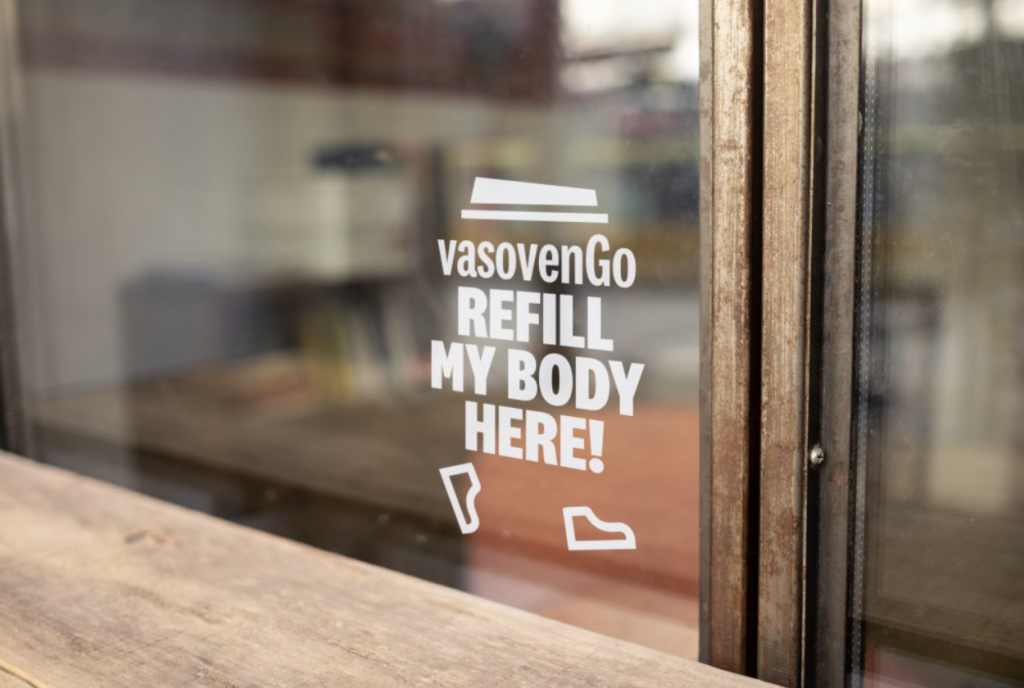
Vinyl Vasovengo in Restaurant and Bar
Noticias relacionadas
How to reduce waste at school?
Discover how to reduce waste in an educational setting, whether it's a preschool, primary school, secondary school, or university. Improve sustainability in schools with practical case studies and our suggestions.
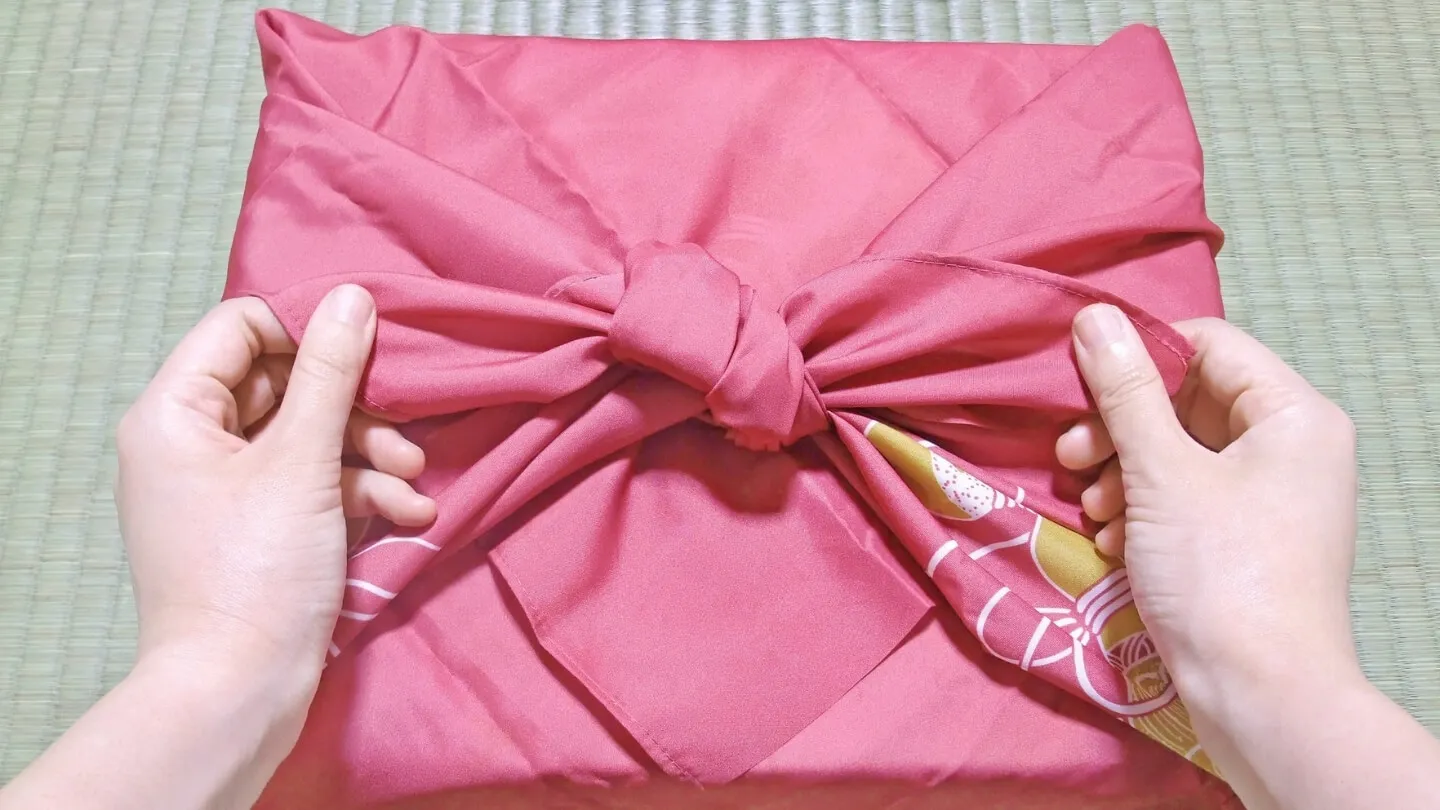
What is furoshiki?
Furoshiki is an ancient Japanese technique for wrapping objects in a cloth. Originating in public baths, it evolved into a versatile form of transport. Today, it's a sustainable, zero-waste alternative…
Creative ideas for a local business campaign in small towns
A creative local commerce campaign promotes conscious consumption and the circular economy through routes, maps, and gamified challenges. It encourages buying locally, minimizes waste, and strengthens neighborhood identity. Through stamps,…