
- Blog
- Good practices
- How to reduce waste at school?
How to reduce waste at school?
- 01/08/2026
- Magda Cebrián
Browse through the publication
What actions help reduce waste at school?
🚯 The largest amount of waste in a school is generated at breakfast time : aluminum foil, single-use plastics and juice or milk tetra packs.
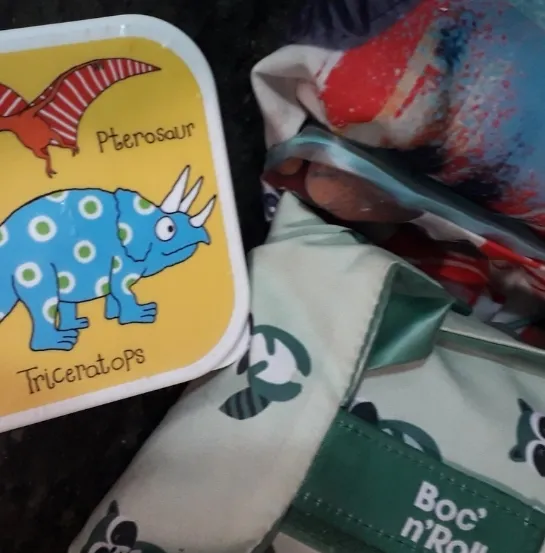
♻️ By integrating reusable items such as lunch boxes, steel bottles and cloth wraps, all this waste could be avoided .
🌱 All leftover food from breakfast or lunch can be composted . If the school has space, the resulting compost can be used in a school garden. If there is no garden, the compost can be given to families to use at home.
⛲ To eliminate plastic from water bottles , filtered water fountains can be installed and the sale of plastic bottles in vending machines or canteens can be eliminated.
Various ways to bring breakfast
Inspiring examples of waste reduction in schools
Below, we share some inspiring examples of how preschools, high schools, and universities are reducing waste.
Infant schools in Navarre
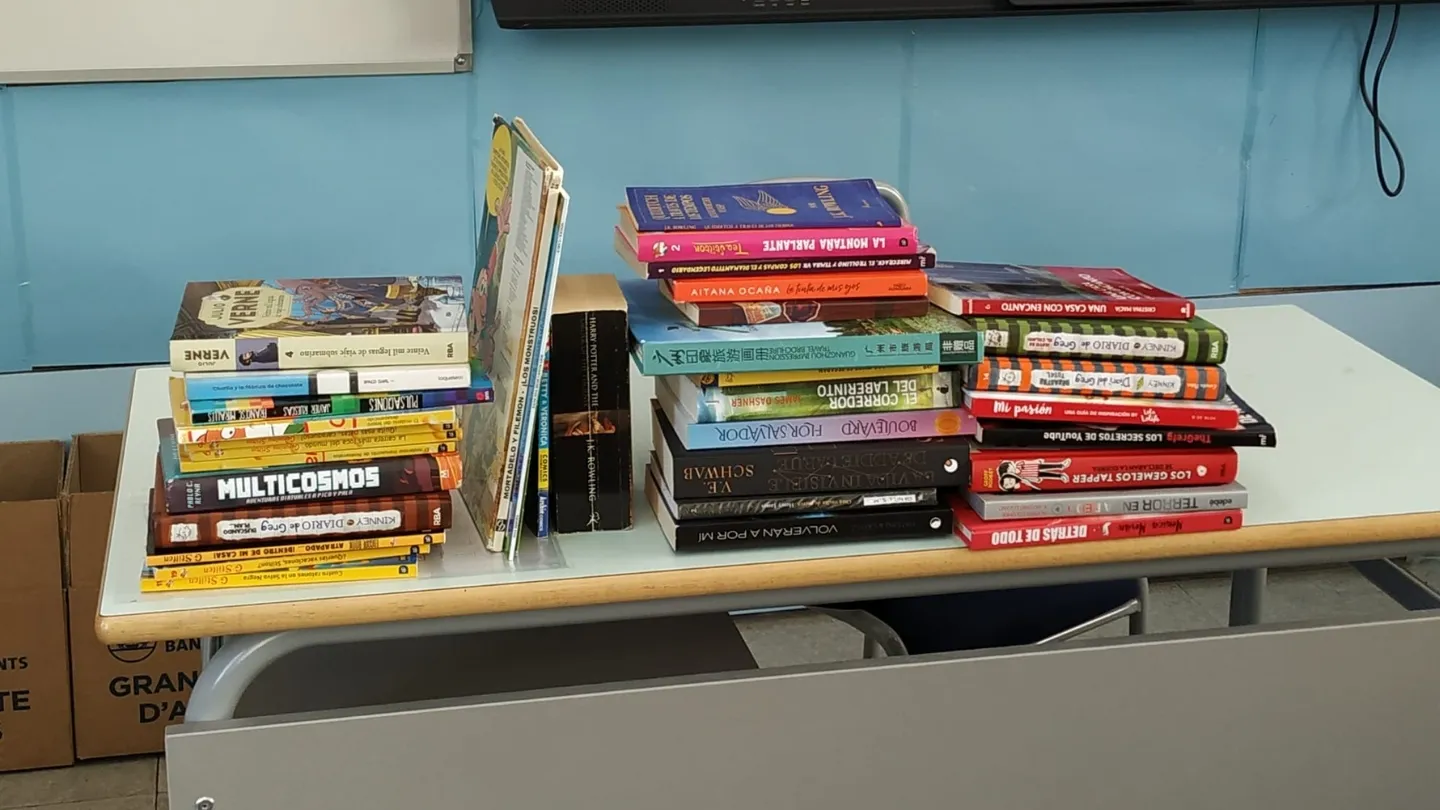
🎒In preschools and primary schools in Navarre, “school supply banks” have been created where families can donate backpacks and books in good condition to be reused for the next school year.
Colleges in the United States
🍽 Thanks to WWF’s Food Waste Warriors program, waste audits are conducted where students analyze the garbage they generate. They weigh and classify it to identify areas for improvement.
University of Manchester
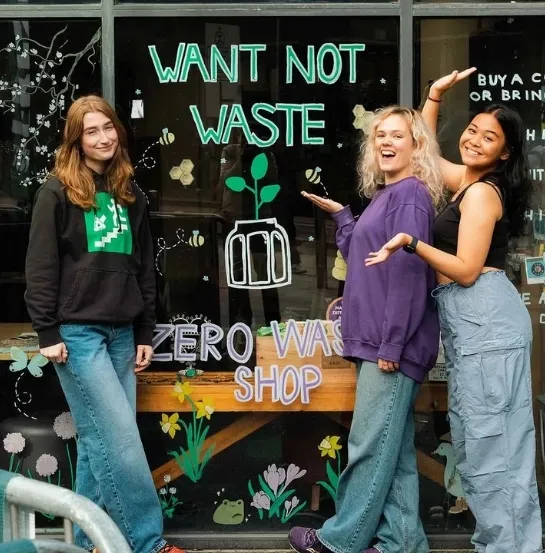
🗑 It has the ” Wat Not Waste ” store, which is run by students, where they sell zero waste products and collect materials that would otherwise go to waste and redistribute them.
The Want Not Waste shop at Manchester University
Actions we propose for waste reduction in schools
Finally, we propose actions and activities that we organize for educational centers around the world that may inspire you.
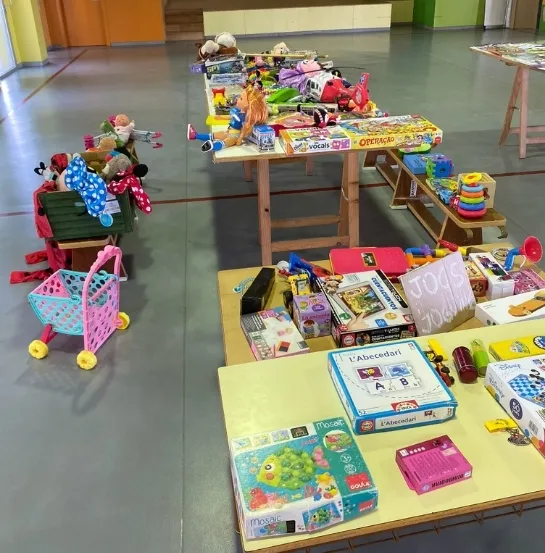
🧸 Organize an event where students can bring various items they no longer use, such as books, clothes, or toys. Give each student a voucher for each item they donate, which they can then exchange for another item brought by a classmate.
👩🍳 Think of recipes your students can make that use all parts of the food. This way they’ll learn not to waste food at home.
🏞 To understand the problem of waste, it’s often best to organize a cleanup in the forest or on the beach to raise awareness and see firsthand the waste that is generated and ends up in nature. I’m sure that after this activity, the students will be much more aware of the issue.
Exchange Market that we held at La Cabanya school
Summary and conclusions
Schools can become sustainable spaces and the ideal environment for cultivating lifelong sustainable habits. The strategy is based on involving the entire school community (students, teachers, and families).
✅ Plastic-free breakfasts and snacks: Replace single-use items such as aluminum foil or cling film with reusable items.
✅ Sustainable school supplies: Promote the use of durable and environmentally friendly materials.
✅ Waste management and composting: Transforming organic waste into fertilizer for the school garden or for houseplants.
✅ Collective commitment: Reducing waste at school is a joint effort. Success will depend on coordination between students, teachers, parent associations, and the school administration, all working together towards the same goal.
Related news
How to reduce waste at school?
Discover how to reduce waste in an educational setting, whether it's a preschool, primary school, secondary school, or university. Improve sustainability in schools with practical case studies and our suggestions.
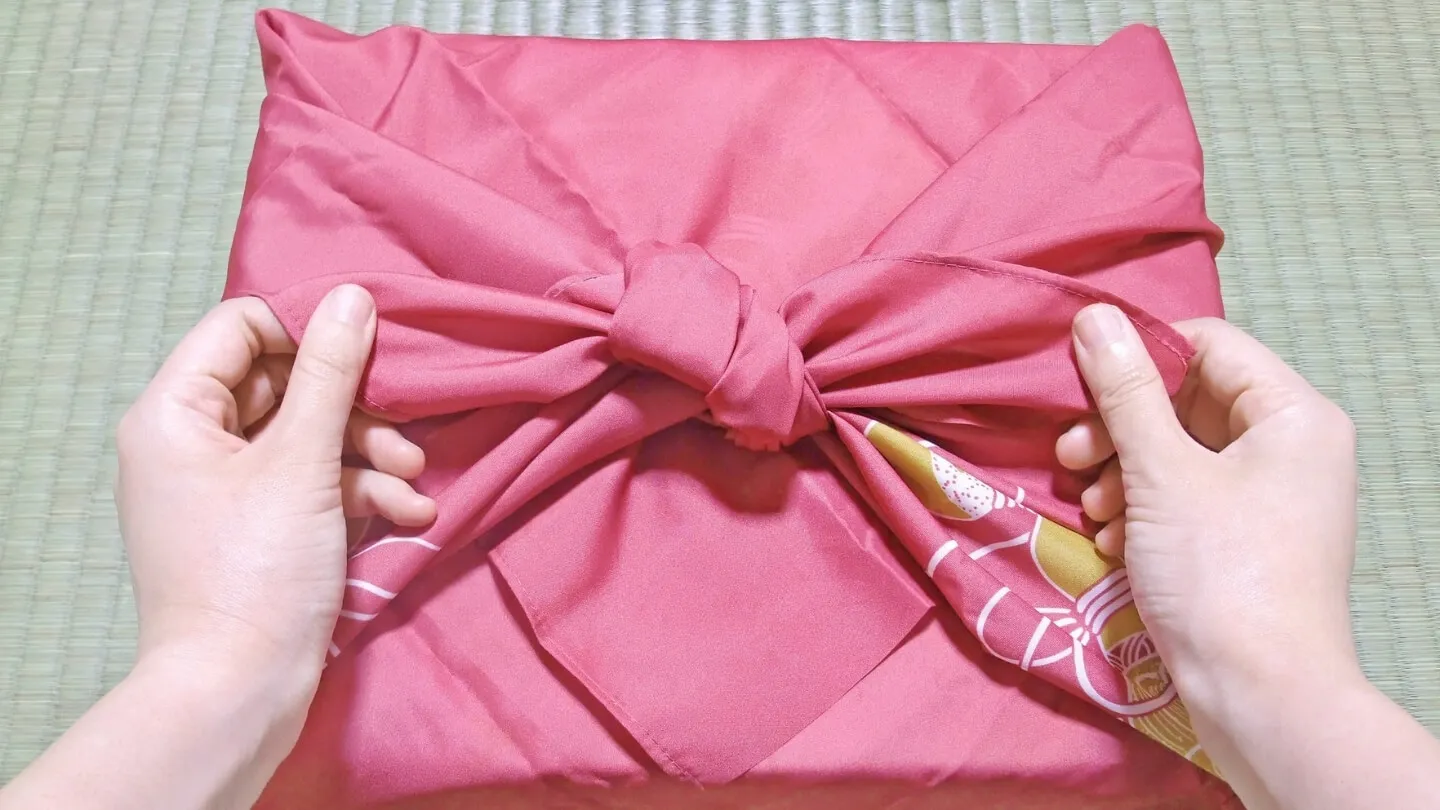
What is furoshiki?
Furoshiki is an ancient Japanese technique for wrapping objects in a cloth. Originating in public baths, it evolved into a versatile form of transport. Today, it's a sustainable, zero-waste alternative…
Creative ideas for a local business campaign in small towns
A creative local commerce campaign promotes conscious consumption and the circular economy through routes, maps, and gamified challenges. It encourages buying locally, minimizes waste, and strengthens neighborhood identity. Through stamps,…

Let’s talk
We are ready to organize a waste reduction activity tailored to the needs of your educational center.