
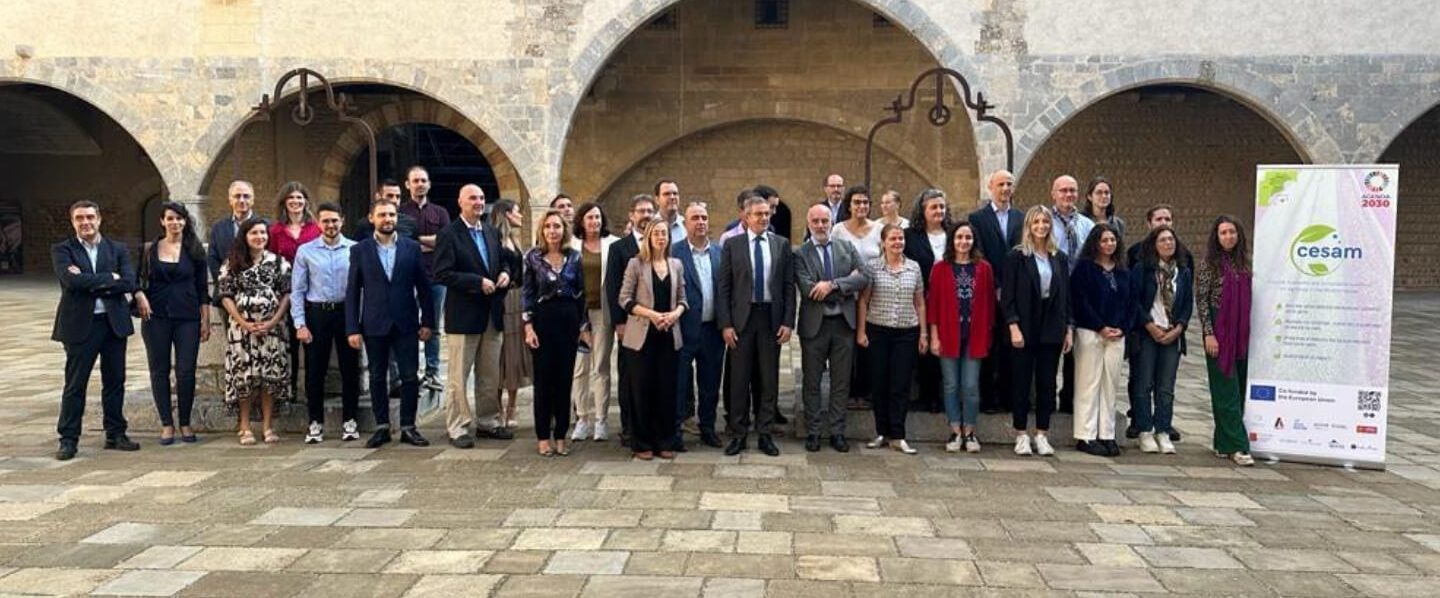
niciamos el proyecto europeo CESAM

We started the European CESAM project

CESAM: Circular Economy and Sustainable Solutions for Agri-Food in the Mediterranean aims to contribute to a circular and sustainable economy model, promoting innovative agri-food value chains.
1

What is CESAM?

This is the acronym for the Circular Economy and Sustainable Solutions for Agri-Food in the Mediterranean project , which brings together nine partners from the European regions of Occitania, Catalonia, and the Balearic Islands to provide solutions to the agri-food sector focused on the Circular Economy and sustainability.

The three regions involved form a logical area of ​​cooperation with similar goals and priorities. The partners seek to lay the foundation for long-term cooperation in their respective value chains. 

The CESAM project focuses on four types of sustainable and circular economy solutions:

1. Treatment and recycling of industrial water / concerted use of water
2. Packaging: eco-design / plastic-free, new materials or circular solutions
3. Process optimization and circular processes: waste reduction
4. Recovery of by-products.

Poster of CESAM

2

Who makes up the CESAM project?

The project will be coordinated by Eurorregió , the European territorial cooperation grouping for the Pyrenees-Mediterranean region. Of the nine partners, four are institutional partners and five are SMEs.

Institutional partners (regional development agencies or clusters):

ASOI – Agri Sud-Ouest Innovation Association (Occitania)
ACCIÓ – Agency for Business Competitiveness (Catalonia)
FundacióBit – Fundació Balear d’Innovació i Tecnologia (Balearic Islands)
Finally, five SMEs from the three regions are participating, presenting specific investment needs to scale their innovative solutions:

NewTimes (Occitantia)
Asclepios Tech (Occitania)
Terracor (Balearic Islands)
Derypol (Catalonia)
Go Zero Waste (Catalonia)
Associate partner
Occitania Economic Development Agency (Occitania)

partner map cesam

Map of the organizations involved

3

Go Zero Waste within the CESAM project

Go Zero Waste is participating in the CESAM project as one of five SMEs with the development of our Paasiot (Packaging as a Service IoT) reusable container dispenser .

The Paasiot system offers users access to reusable, clean, and adaptable containers for a variety of purposes. This smart cabinet is connected to an app that tracks the circulation of containers throughout the entire cycle: from delivery points to washing centers and their subsequent return, ensuring hygienic safety throughout the entire process. 

Paasiot’s main objective is  to promote reusable systems while ensuring convenience and safety  for both end users and businesses as a sustainable alternative to single-use items.

PaaSiot

Image showing the first prototype of PaaSiot

4

How does the Paasiot system work?

The dispenser can be placed in settings such as restaurants, cafes, shopping malls , and other spaces in the hospitality and catering industry to help businesses and users reduce waste.

Users can access clean, reusable containers with a simple login using their phones or personal card and return used containers after use.

5

Paasiot within the CESAM project

Within the framework of the CESAM project, Go Zero Waste is working to improve and industrialize the entire Paasiot system (including the IT platform and container dispensers) as well as its implementation in real-world environments. The roadmap includes: 

  1. Improved functionality and scalability of the computing platform and container dispensers.
  2. Integration of key enabling technologies, such as advanced manufacturing, security, and connectivity, to optimize system performance.
  3. Implementation of the Paasiot system in various contexts to validate its effectiveness and adaptability.

Through this project, Go Zero Waste pursues the following  objectives :

  • Promote the widespread use of reusable packaging in a variety of contexts, helping to reduce single-use waste and carbon emissions associated with packaging.
  • Improve resource efficiency through longer and more efficient lifespan.
  • Facilitate the creation of green jobs.
  • Promote sustainable consumption practices by providing convenient access to reusable products.

6

Financing

CESAM is a program co-financed (70%) by the European Union through the ERDF Interregional Innovation Investment Facility (I3) program, with a total budget of €3,022,935.

Each partner will contribute their own funds representing 30% of the total eligible expenses. 

The project duration is 36 months, from September 2023 to August 31, 2026.

7

Call for tender

Within the framework of the CESAM project , Go Zero Waste invited qualified and experienced applicants (companies, public or private institutions, individuals, etc.) to submit proposals to help us develop our work within CESAM. We are looking for innovative solutions and reliable expertise to deliver outstanding results in both software and hardware. Total available budget: €30,000.00 for software proposals and €20,000.00 for hardware proposals. Application deadline: April 22nd, 5:00 PM CET.

Interested parties should send their proposals to info@gozerowaste.es . More information can be found in the applicant guide:

Software: 

Software call for tenders

Software tender application form


8

Start of subcontracting

After evaluating the proposals received, the Go Zero Waste team selected the following companies for the development of the Hardware and Software: 
Hardware: Lúcid , an agency that combines research and strategy, industrial design and digital design to generate positive impact experiences. 
Software:  Sparsity , a technology company, emerged from the DAMA-UPC (Polytechnic University of Catalonia) research group, with experience in data management and advanced algorithmic design. 


Within the framework of the CESAM project, Go Zero Waste is working to improve and industrialize the entire Paasiot system (including the IT platform and container dispensers) as well as its implementation in real-world environments. The roadmap includes: 

  1. Improved functionality and scalability of the computing platform and container dispensers.
  2. Integration of key enabling technologies, such as advanced manufacturing, security, and connectivity, to optimize system performance.
  3. Implementation of the Paasiot system in various contexts to validate its effectiveness and adaptability.

Through this project, Go Zero Waste pursues the following  objectives :

  • Promote the widespread use of reusable packaging in a variety of contexts, helping to reduce single-use waste and carbon emissions associated with packaging.
  • Improve resource efficiency through longer and more efficient lifespan.
  • Facilitate the creation of green jobs.
  • Promote sustainable consumption practices by providing convenient access to reusable products.

9

Next Steps: Cascade Funding

Once we have the new PaaSiot model under construction, the CESAM team launched Cascade Funding, where Go Zero Waste is looking for two SMEs to conduct two pilot tests: 
1.- Restaurant : with a budget of €20,000 to conduct the pilot test. More details can be found at the following link. 
2.- HoReCa : with a budget of €20,000 to conduct a pilot test.  More details can be found at the following link. 
We trust that in the coming months we will be able to find the perfect partner to continue with our project and achieve the maximum environmental, social, and economic impact. 

News related

How to reduce waste at school?

Discover how to reduce waste in an educational setting, whether it's a preschool, primary school, secondary school, or university. Improve sustainability in schools with practical case studies and our suggestions.
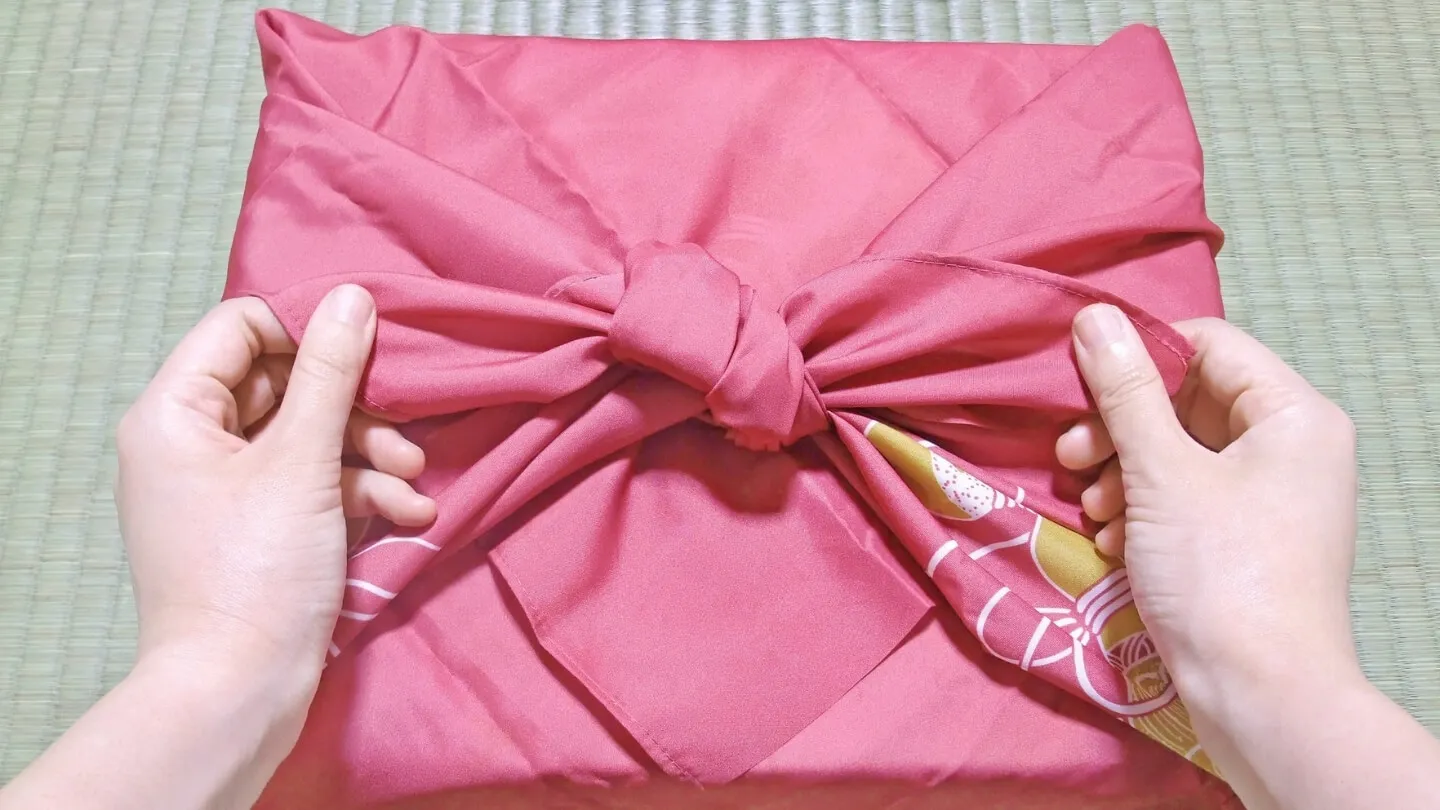
What is furoshiki?

Furoshiki is an ancient Japanese technique for wrapping objects in a cloth. Originating in public baths, it evolved into a versatile form of transport. Today, it's a sustainable, zero-waste alternative to wrapping paper, combining functionality, beauty, and environmental responsibility by being completely reusable.

Creative ideas for a local business campaign in small towns

A creative local commerce campaign promotes conscious consumption and the circular economy through routes, maps, and gamified challenges. It encourages buying locally, minimizes waste, and strengthens neighborhood identity. Through stamps, rewards, and community experiences, it invites people to rediscover shops and appreciate the social value of small businesses.