

Lightsource bp
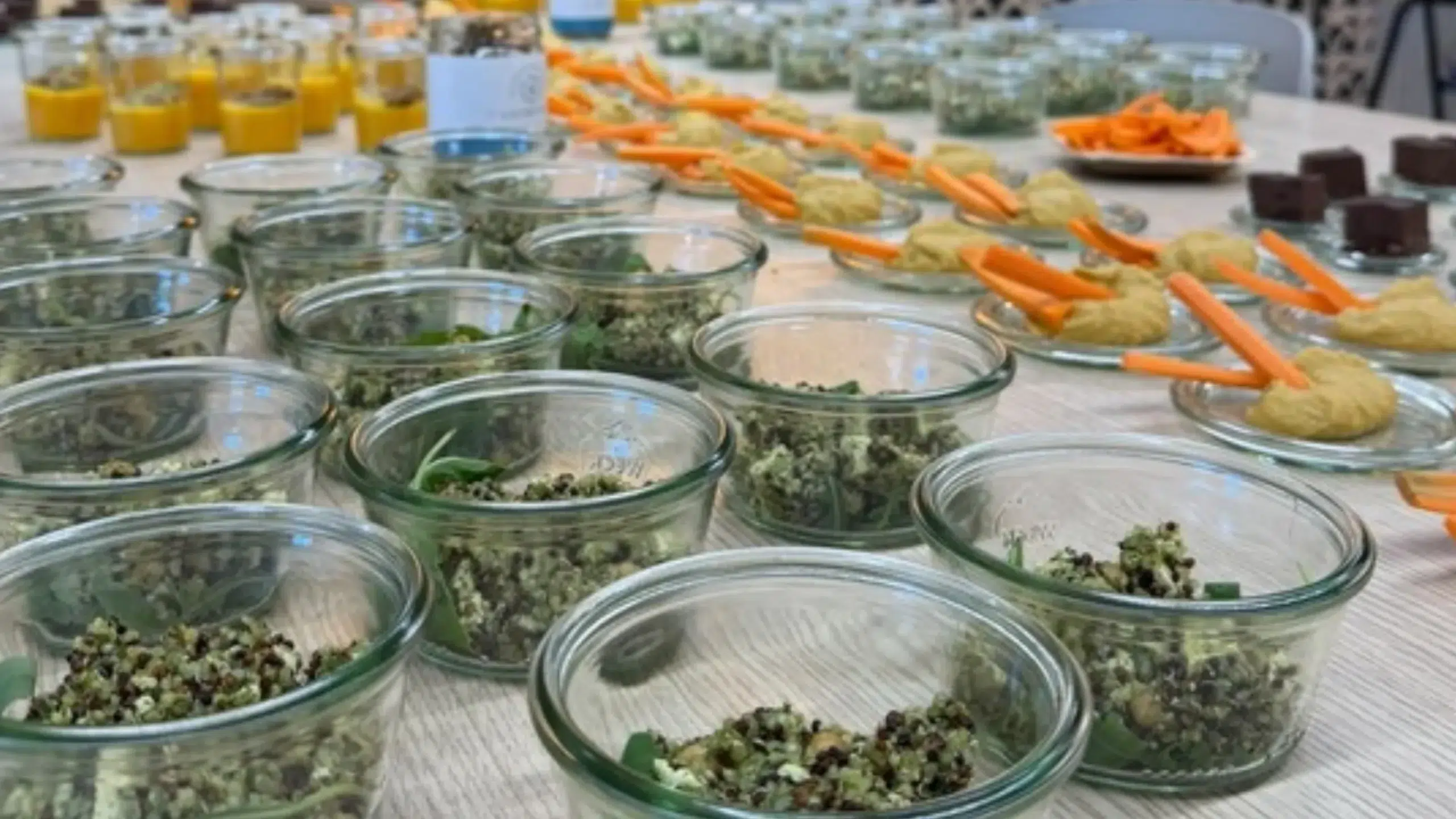
Go Zero Waste organized a showcooking of leftover cooking for Lightsource bp, promoting corporate sustainability. Participants learned creative techniques to reduce food waste, encouraging responsible and healthy habits.


Eight out of ten Europeans say environmental impact influences what they buy. Almost six out of ten would pay more for it. And yet, most of them don’t.
Source: European Commission
Most people who want to reduce their waste don’t fail for lack of willpower, but for lack of practical information. That’s what we discovered, and it’s the origin of everything that came after.
We started with ourselves. We set out to do our weekly shopping in Barcelona’s Gràcia neighborhood and come home without any plastic.
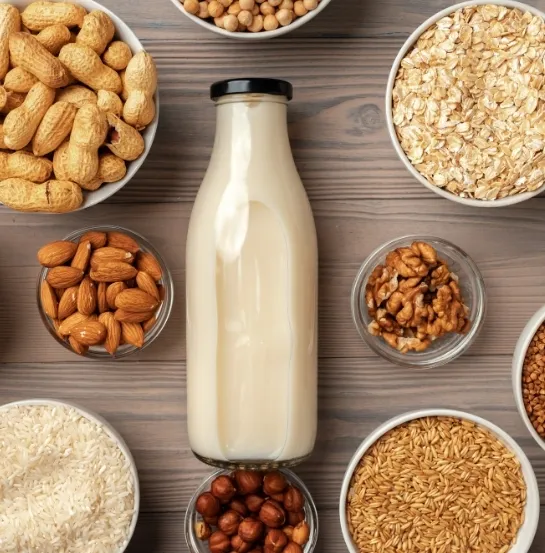
We managed it, but it was much harder than we expected. Finding something as everyday as milk that didn’t come in a Tetra Pak took us an entire afternoon of research. And that’s when the uncomfortable question came up: if this was so hard for us, motivated and with time on our hands… what about all the people who want the same thing but don’t have that much time?
We started asking around. And we saw that almost nobody gives up on a sustainable lifestyle out of lack of interest: they give up out of exhaustion. The stories were always the same, and always in the same order. Three barriers, one after another:
1.- I don’t know where to shop without packaging
2.- I don’t know where to start, there’s too much information
3.- I’ve made it to the shop, but I still need a container to take it home.
Finding milk that didn’t come in a Tetra Pak took us an entire afternoon: the first sign that practical information was missing.
We didn’t have an awareness problem. We had a tools problem. That’s why we decided to build one.
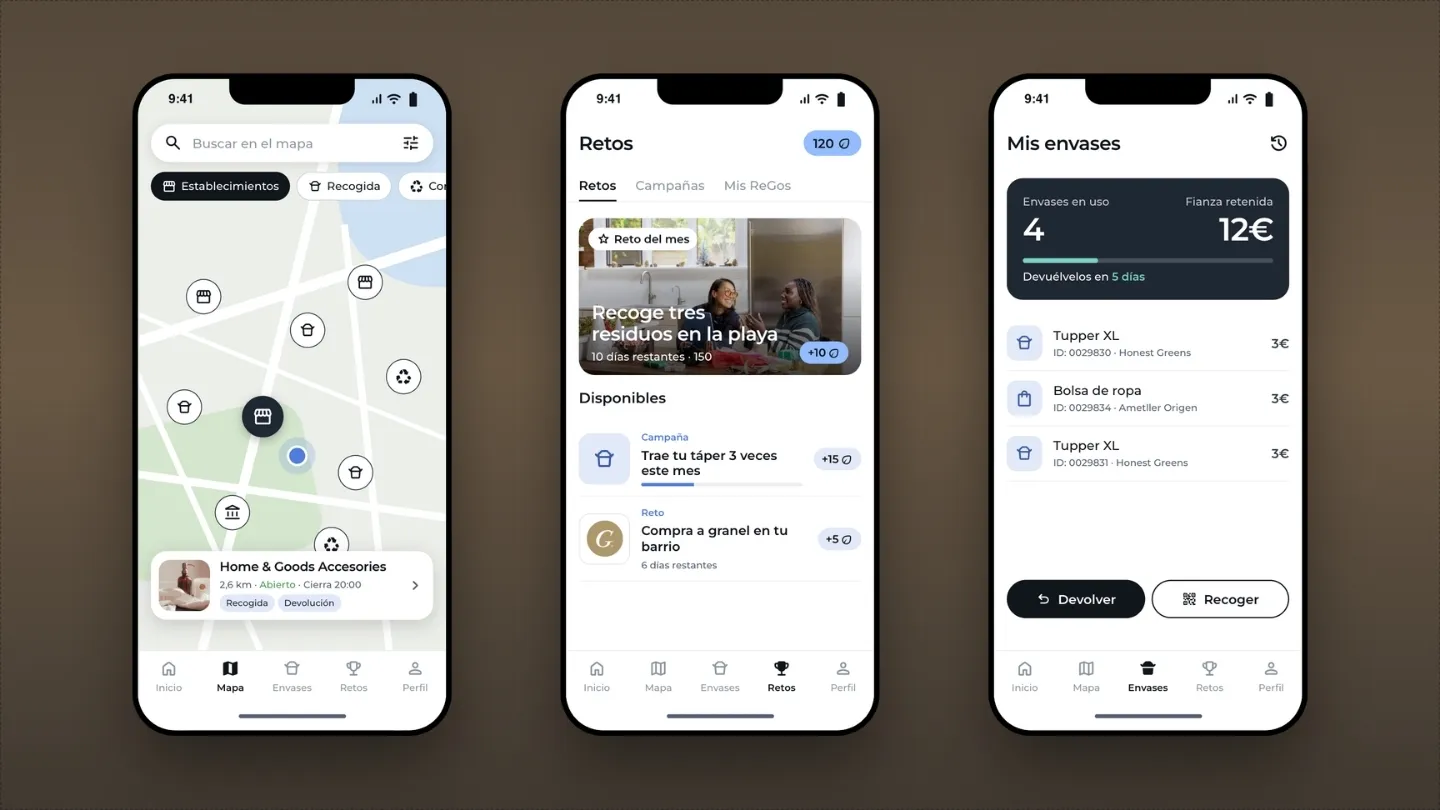
A sustainable shop map is a collaborative map that shows you, based on your location or any location you choose, the nearby shops and services where you can buy, repair or reuse without generating waste. It was the first piece we built, because it was the first barrier that came up.
The problem was never that alternatives didn’t exist: it was that nobody knew where they were. They were scattered, with no visibility and no easy way to find them.
That’s why the map is built by the community itself together with the Go Zero Waste team. Anyone can suggest a business that is committed to the circular economy and zero waste. No company pays to be listed. We check that each suggestion meets at least one of the good practices we have defined.
· Bulk stores and local markets
· Second-hand shops, vintage and circular fashion
· Repair and reuse services
· Bars, restaurants and hotels with zero waste practices
· Recycling centers and separate collection points
In other words: not just where to buy, but where to repair, reuse and return. It’s a good example of how technology helps reduce waste.
The sustainable shop map shows you nearby bulk stores, with opening hours and walking distance.
A sustainable challenge is a specific, time-bound commitment to reduce your environmental impact, designed to be so easy that anyone can complete it. That’s how we tackled the second barrier.
With the map in place, the next wall appeared: people knew where to go, but still weren’t taking action. “Living zero waste” is such a huge goal that it’s paralyzing. Nobody knows what the first step is, so they don’t take any.
A sustainable challenge breaks that because it turns a mountain into a single step. It gives you a small goal, a short deadline and a way to know whether you’ve achieved it. And, above all, it doesn’t demand perfection: it demands getting started.
We designed them as triggers. They’re not a list of tips: they’re an action with a date.
· Reuse a glass jar
· Take your reusable bottle to work
· Buy in bulk with a reusable bag
· Make your own compost at home
Taking your own container to the butcher’s: a small, concrete sustainable challenge that’s easy to turn into a habit.
What started as an individual nudge worked even better in groups. Today it’s a program of customized sustainable challenges that city councils, companies and schools launch for their residents or employees, with tailored actions, points and incentives at local businesses.
The third barrier was the one we least expected, and the most frustrating of all: you can know where to go and be motivated, and still walk out of the shop with a single-use plastic container in your hand.
Because if the business doesn’t have an alternative ready, all the previous effort falls apart in the last mile. It’s not enough to bring the customer to the shop: the shop has to be ready to welcome them.
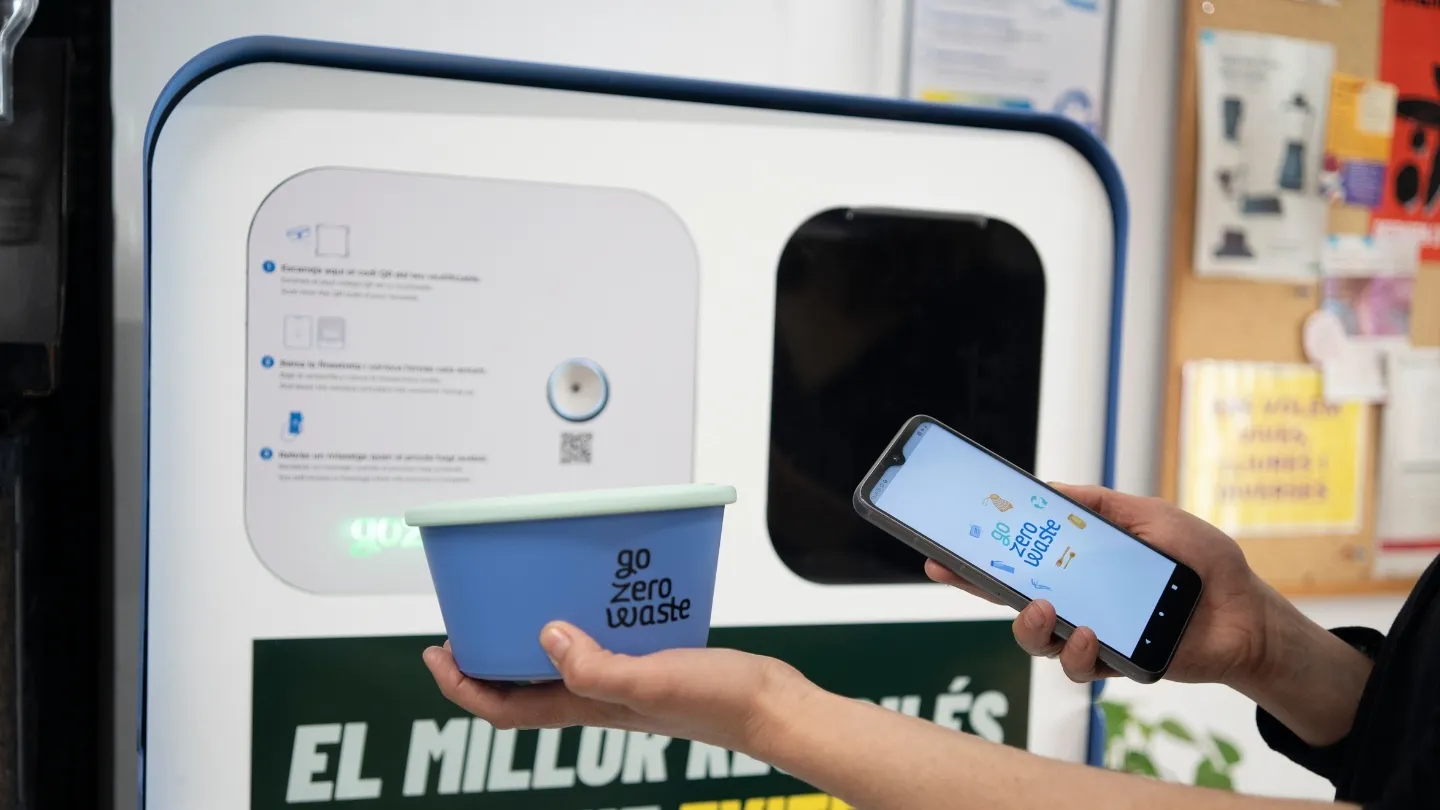
A reusable packaging system replaces single-use packaging with returnable packaging, with traceability, return logistics and washing, without changing how the business operates.
That’s why the third piece is aimed at both the consumer and the business: a reusable packaging service for hospitality, food service and retail that cuts recurring spending on single-use packaging, reduces the waste to be managed and helps comply with single-use plastics regulations.
Takeaway food in reusable packaging: the customer takes their tortilla home without generating waste and returns the container afterwards.
The map solves the where. Sustainable challenges solve the where do I start. Reusable packaging solves the how do I take my food home without generating waste.
They’re not three different products: they’re three pieces of the same journey, developed to make the path towards zero waste and the circular economy easier.
Because the difficulty isn’t motivation, but three practical barriers: not knowing where to buy products without packaging, not knowing where to start when facing an overly ambitious goal, and finding that the business doesn’t offer alternatives to single-use packaging. Removing those three barriers is what makes change last over time.
A sustainable challenge is a specific, time-bound commitment to reduce your environmental impact, such as going a week without buying plastic bottles. Its value lies in being measurable and achievable, and in becoming a habit when you repeat it.
It’s a collaborative map that shows, based on your location, the nearby shops and services that let you buy without single-use packaging: bulk stores, second-hand shops, repair, reuse or collection points. At Go Zero Waste it’s fed by the user community itself, and no company pays to be listed.
From the app itself, any user or shop owner can suggest a business, indicating which services it offers. The team reviews each suggestion before publishing it, so the map stays up to date and reliable.
It reduces recurring spending on disposables, cuts the volume of waste to be managed and helps comply with single-use plastics regulations. It’s also a direct communication asset towards customers who increasingly value these practices.
Yes. The app is free for users on iOS and Android, both the map and the challenges. The model is funded by the services Go Zero Waste offers to companies, city councils and businesses.
We wanted to live without generating waste and discovered that willpower wasn’t the problem. By trying it ourselves and listening to other people, we always came across the same three barriers: not knowing where to shop without packaging, not knowing where to start when facing an overly ambitious goal, and getting to the shop and still needing a single-use container.
Go Zero Waste App was created to break down those three barriers with three tools: a collaborative sustainable shop map that shows you the alternatives near you, sustainable challenges that turn intention into a concrete action with a date, and a reusable packaging service so that businesses are ready when you arrive.
It’s not an awareness problem. It’s a tools problem.
✅ The barrier isn’t motivation, it’s friction.
Almost nobody gives up on a more sustainable lifestyle for lack of interest: they give up out of exhaustion. Every extra minute it takes to find the alternative is one more reason to go back to the usual option. Reducing friction changes more behaviors than persuasion does.
✅ What can’t be found doesn’t exist.
Packaging-free alternatives were already there before the map: bulk stores, second-hand shops, repair services. The problem was never supply, it was visibility. That’s why a collaborative sustainable shop map has more impact than yet another awareness campaign.
✅ A big goal paralyzes; a small challenge activates.
“Living zero waste” isn’t a plan, it’s a statement of intent. Sustainable challenges work because they turn the mountain into a single step: one action, one deadline and a way to know whether you’ve achieved it. And they don’t demand perfection, just getting started.
✅ Change falls apart in the last mile if the business isn’t ready.
You can have an informed, motivated person at the counter and still end up handing them a single-use container. That’s why the third piece isn’t aimed at the consumer, but at the business: without reusable packaging in hospitality and retail, the customer’s effort breaks down right at the end.
✅ The three pieces only work together.
The map without challenges is just a directory. Challenges without the map are just good intentions. And both without reusables are only half a change. Waste reduction isn’t solved piece by piece, it’s solved by supporting the whole journey. Because, in the end, the best waste is still the waste that’s never created.
At Go Zero Waste we design sustainable challenges for companies and reusable packaging services for HoReCa and Retail.
Book a free 20-minute call and we’ll propose the solution that best fits your needs.
Environmental consultant and impact entrepreneur based in Barcelona, specializing in sustainability, zero waste and the circular economy.
You may also be interested in:
Go Zero Waste organized a showcooking of leftover cooking for Lightsource bp, promoting corporate sustainability. Participants learned creative techniques to reduce food waste, encouraging responsible and healthy habits.