
- Blog
- Environmental awareness: what it is and how to become one
Environmental awareness: what it is and how to become one
- 28/09/2026
- Magda Cebrián
- Updated on 11/09/2026
Environmental awareness is the process by which a person understands how their decisions affect the environment (what they consume, what they throw away, how they get around, how much energy they use) and turns that knowledge into habits. It is not just about knowing that climate change exists or that plastics end up in the sea: an environmentally aware person knows what they can do and does it as a matter of habit.
In a company, environmental awareness is the starting point of any sustainability strategy: no environmental policy works if the people who have to apply it neither understand it nor share it. That is why training is not about attending a one-off talk, but about combining knowledge, hands-on experiences and changes in the workplace that make new habits easier. In this guide we explain how to do it, step by step.
7 out of 8 workers worldwide do not have a single green skill
Browse this post
Environmental awareness in the workplace: from concern to action
In Spain, environmental concern is high, but it does not automatically translate into action. According to the Eurobarometer, 88% of the Spanish population considers climate change a serious problem, above the European average (85%).
Sensitisation, awareness and training: not the same thing
It is worth distinguishing three levels that are often confused:
· Sensitisation: sparking interest in and emotion about a problem (a striking figure, a documentary or a litter clean-up).
· Awareness: understanding the link between that problem and your own behaviour, and accepting that you can act.
· Training: acquiring the specific knowledge and skills to act well: sorting waste correctly, calculating a footprint, redesigning a process, purchasing with environmental criteria.
A good workplace environmental awareness programme works on all three levels at once. Sensitisation without training generates good intentions that fade away; training without sensitisation generates knowledge that is never applied.
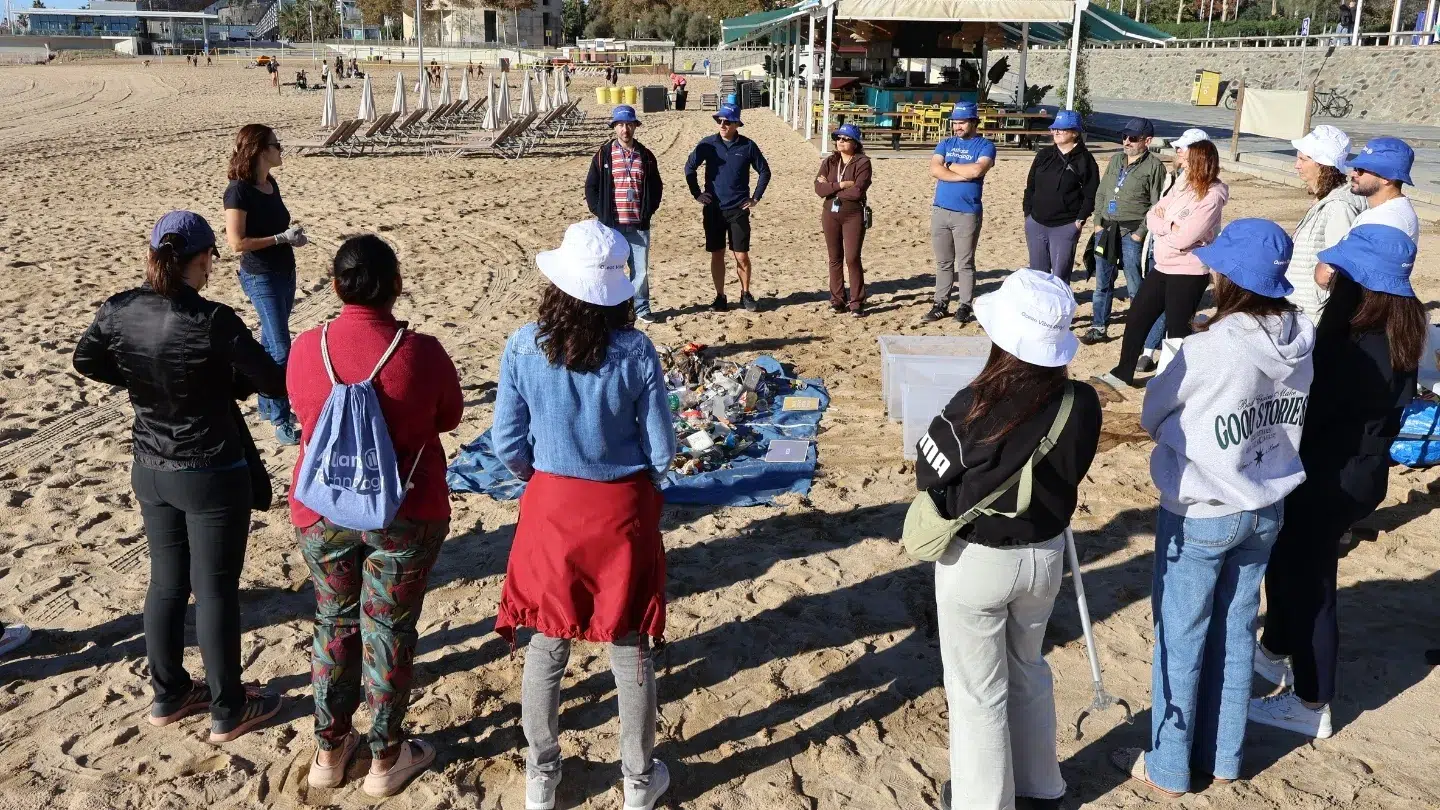
Training in the workplace itself helps people apply what they learn from day one.
Why environmental awareness is now a strategic issue
There are three reasons why companies are investing in it:
1.- Talent: According to Deloitte’s 2025 Gen Z and Millennial Survey, 70% of Gen Zs and millennials take a company’s environmental credentials into account when choosing where to work, and almost half say they have pushed their employer to take more action.
2.- Regulations and certifications. ISO 14001:2015, in its “Awareness” clause, requires people working under the organisation’s control to be aware of the environmental policy, the significant environmental aspects related to their work, their contribution to the management system and the implications of not conforming with it. On top of this come sustainability reporting requirements (the CSRD or the voluntary VSME standard for SMEs).
3.- Costs: Waste, energy and squandered materials all come at a price. An aware team spots day-to-day inefficiencies that no external auditor ever sees.
How to raise employees' environmental awareness: a four-phase method
The question of how to raise employees’ environmental awareness has a less intuitive answer than it seems: informing is not enough. Programmes that work follow a sequence of diagnosis, message, practice and follow-up.
Start with a diagnosis, not a talk
Before designing any action, you need to know where the team is starting from:
· What environmental impacts the company really has: waste, energy, commuting, purchasing, food waste in the canteen.
· What staff already know and do: a short survey (5-10 questions) serves as a baseline to measure change later on.
· What barriers exist: often the problem is not a lack of will, but not having suitable bins, not knowing what goes in each one or not having reusable alternatives.
With this diagnosis, you prioritise two or three topics instead of trying to cover everything.
Waste audits also happen at the counter: listening to how each business works is the starting point.
Environmental awareness campaigns for employees: messages and calendar
An environmental awareness campaign for employees should be short, specific and ongoing. Some key points:
· One challenge per month (for example, a month without single-use cups).
· Positive messages using your own data: for example, “last month we generated X kg of packaging in the office” mobilises people more than a global statistic.
· Make use of dates in the environmental calendar: World Environment Day (5 June), the European Week for Waste Reduction (November) or the International Day of Awareness of Food Loss and Waste (29 September).
· Internal ambassadors: a small group of volunteers in each department who answer questions and lead by example. As the ISO 14001 guidance points out, few training actions work as well as seeing management apply what it asks of others.
Sustainable office: good practices to turn awareness into habits
Awareness takes hold when the work environment makes the right choice easy. A sustainable office with clear good practices makes the environmentally friendly habit the easy path.
How to reduce waste in the office
These are the measures with the highest return in most offices:
· Eliminate single-use items (cups, capsules and cutlery) and replace them with reusable tableware and water fountains.
· Well-signposted sorting points with visual examples of what goes in each bin; poor signage is the leading cause of mistakes.
· Double-sided, black-and-white printing by default, with print-on-demand.
· Purchasing with circular criteria: refillable, bulk, repairable or second-hand products (furniture, refurbished IT equipment).
· Management of organic waste in the kitchenette and canteen, and measures against food waste at internal events.
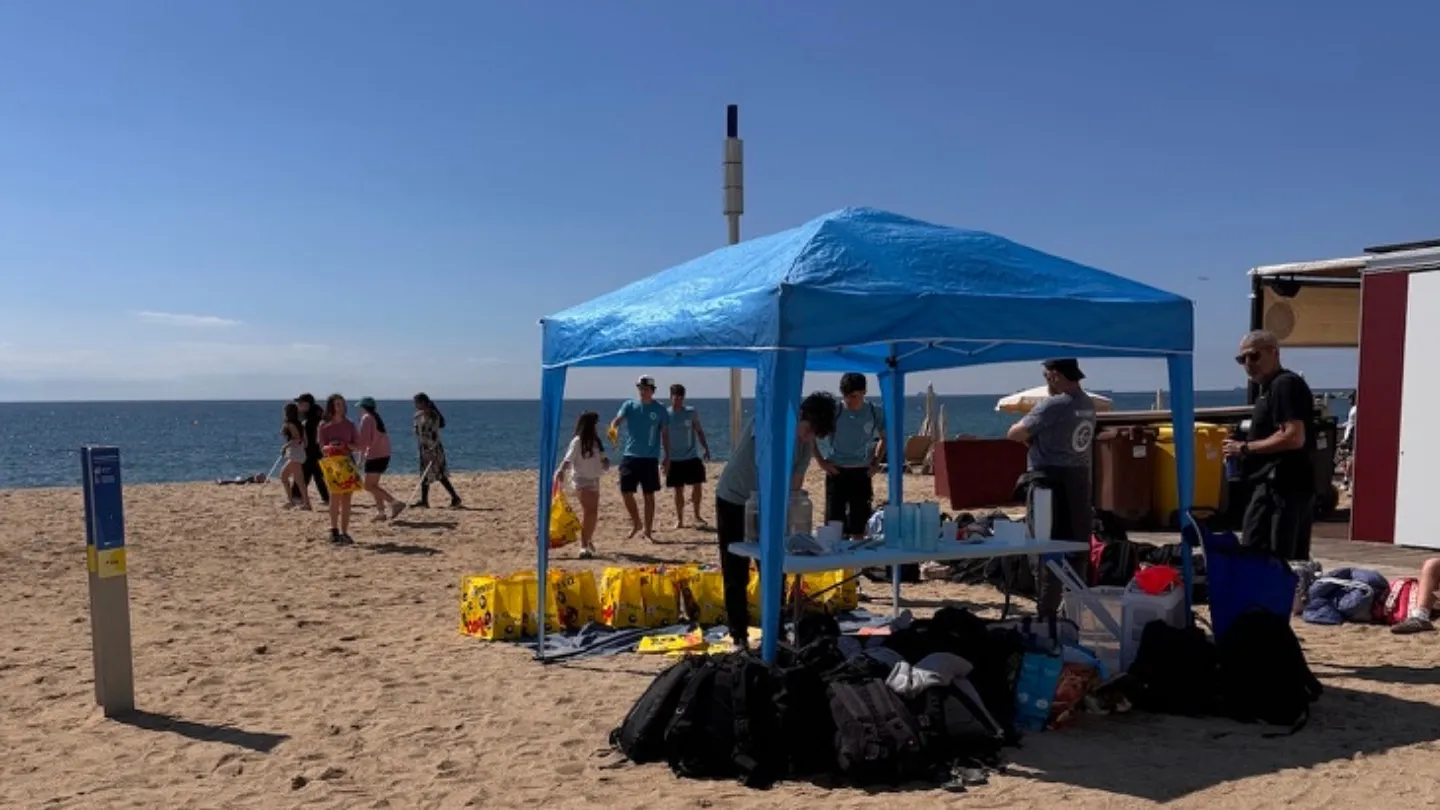
Awareness shows when habits change: eating without generating single-use packaging.
How to measure whether awareness-raising works
What isn’t measured doesn’t improve. Some simple indicators to evaluate your programme:
· Kilos of waste per person per week, and percentage of residual waste (the lower, the better the sorting).
· Consumption of paper and disposables before and after the campaign.
· Participation rate in training sessions, challenges and volunteering.
· A knowledge and habits survey repeated at 6 and 12 months, compared with the baseline from the diagnosis.
- What is environmental awareness?
It is the process by which a person understands how their daily decisions affect the environment and adopts habits to reduce that impact. It goes beyond knowing about environmental problems: it means accepting that you can act, and doing so as a matter of habit.
- What is the difference between environmental awareness, sensitisation and environmental education?
Sensitisation sparks interest in a problem; awareness connects that problem with your own behaviour; and environmental education or training provides the knowledge and skills to act correctly. A good programme combines all three levels.
- How can you raise employees' environmental awareness without it feeling imposed?
By starting from a diagnosis of the company, using your own data instead of global figures, proposing specific, voluntary challenges, relying on internal ambassadors and, above all, through the visible example set by management. Hands-on activities (workshops, sustainable team building, volunteering) generate more engagement than one-way talks.
- How long does environmental awareness training last?
It depends on the goal: a sensitisation talk can last one to two hours; a hands-on workshop, half a day; and a full environmental training programme for employees can be spread over several sessions across a number of weeks, combined with challenges and activities.
Summary and conclusions
Environmental awareness is the step that turns concern for the environment into concrete habits. In Spain, concern is high, but the gap between what we think and what we do is still wide, and the workplace is one of the spaces best placed to close it. To get there, it pays to follow a method: diagnose the impacts and the team’s starting point, launch an awareness campaign with concrete challenges, offer environmental training tailored to each role, reinforce it with experiential activities such as sustainable team building and environmental corporate volunteering, and consolidate habits with a sustainable office and indicators that make it possible to measure change.
✅ Raising awareness is not just informing: it requires combining sensitisation, training and changes in the work environment.
✅ A prior diagnosis is essential to prioritise the topics with the greatest impact in your company.
✅ Training must be adapted to each role: a common block for all staff and specific modules for each area.
✅ Hands-on experiences are remembered more than talks, as long as they include a reflection afterwards.
Bibliography
- LinkedIn Economic Graph. Green skills research and resources. https://economicgraph.linkedin.com/research/green-skills-resources
- LinkedIn. Global Green Skills Report 2024 (summary of findings in ESG News, 17/11/2024). https://esgnews.com/global-demand-for-green-talent-outpaces-supply-linkedin-report/
- European Commission – Representation in Spain. Special Eurobarometer 565 on climate change (1/07/2025). https://spain.representation.ec.europa.eu/noticias-eventos/noticias-0/los-europeos-consideran-la-lucha-contra-el-cambio-climatico-una-prioridad-y-apoyan-la-independencia-2025-07-01_es
- Infobae. [in Spanish] Cae la preocupación por el cambio climático en España (2026 World Risk Poll, Lloyd’s Register Foundation and Gallup; 23/06/2026). https://www.infobae.com/espana/2026/06/23/cae-la-preocupacion-por-el-cambio-climatico-en-espana-cuando-mas-evidentes-son-sus-consecuencias-calor-e-incendios-forestales/
- Deloitte. 2025 Gen Z and Millennial Survey. https://www.deloitte.com/global/en/about/press-room/deloitte-2025-gen-z-and-millennial-survey.html
- ESG Today. 70% of Gen Z, Millennials Consider Environmental Sustainability Important in Choosing Employers (15/05/2025). https://www.esgtoday.com/70-of-gen-z-millennials-consider-environmental-sustainability-important-in-choosing-employers-deloitte-survey/
- Nueva ISO 14001. 7.3 Awareness [in Spanish]. https://www.nueva-iso-14001.com/7-3-conciencia/
- Fundación Telefónica. Voluntare 2025 report on corporate volunteering [in Spanish] (23/02/2026). https://www.fundaciontelefonica.com/noticias/fundacion-telefonica-colabora-en-el-informe-voluntare-2025-que-consolida-el-voluntariado-corporativo-como-herramienta-estrategica-de-impacto-social/
- MITECO – CENEAM. Action Plan for Environmental Education for Sustainability (PAEAS) [in Spanish]. https://www.miteco.gob.es/es/ceneam/plan-accion-educacion-ambiental.html
💡 Want your team to move from concern to action?
At Go Zero Waste we design tailor-made sustainability training for companies: hands-on workshops, online or hybrid sessions and awareness activities adapted to your sector and your team’s level.
Environmental consultant and impact entrepreneur based in Barcelona, specialising in sustainability, zero waste and the circular economy.
- Corporate sustainability
- Circular economy
- Environmental education
- Zero waste projects
- ESG & CSRD reports
You may also be interested in:
Five most in-demand sustainability and environmental training topics for companies
Blog 07/14/2026 Magda Cebrián Sustainability and environmental training has gone from being an optional extra to a strategic necessity. European regulatory pressure, demands from clients and investors, and the growing…
Examples of sustainable activities that generate a large impact
Today we highlight key actions to promote sustainability and the circular economy. These include the transition to renewable energy, bulk and local consumption, and waste prevention. These initiatives not only…

How to reduce waste in the company?
Did you know that reducing waste in your company is not only possible, but also profitable? At Go Zero Waste, we help you implement simple and effective practices that minimize…