
• Blog
  • Activity ideas for World Environment Day
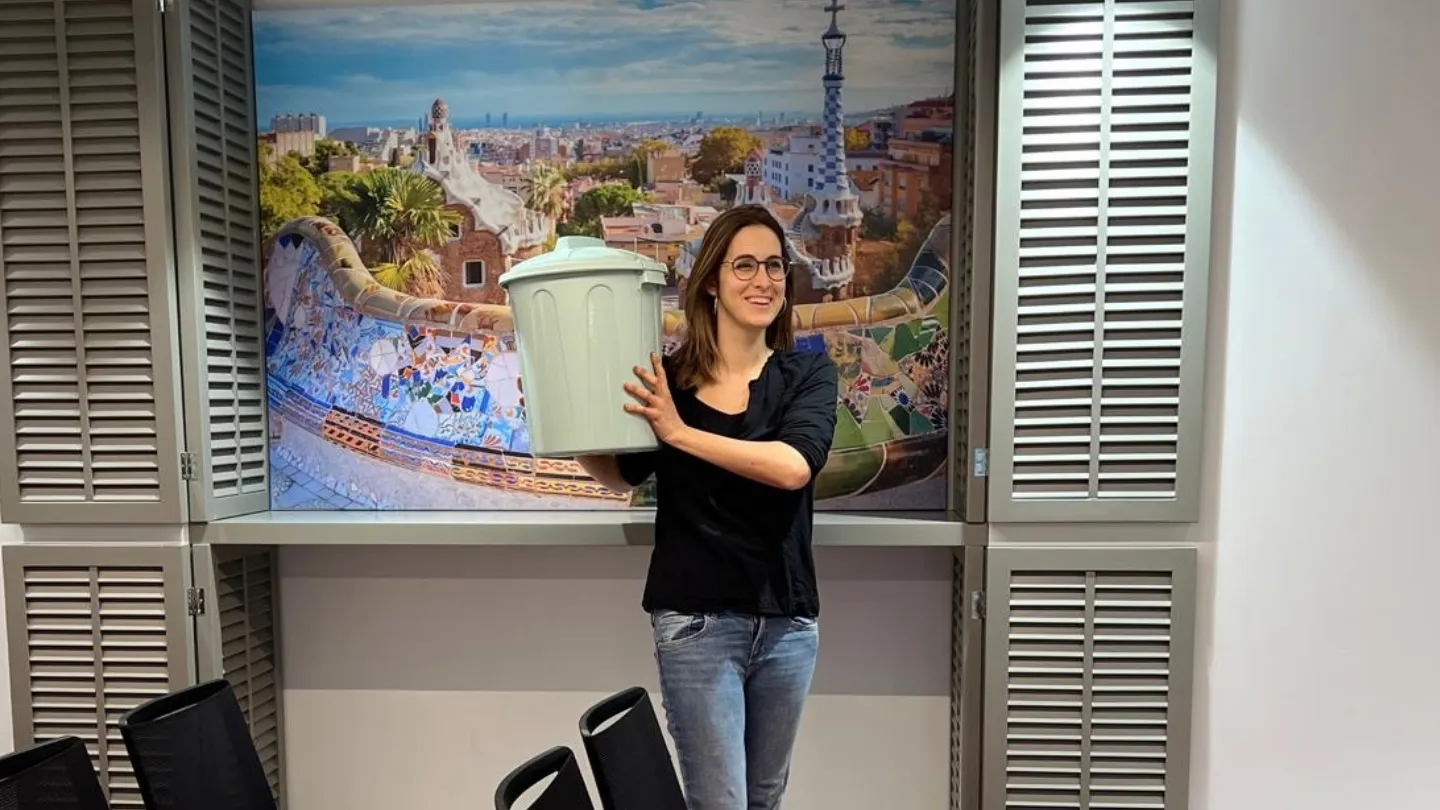
Trabajadora sostiene un cubo de basura durante una auditoría de residuos en la oficina

Activity ideas for World Environment Day

The best activity ideas for World Environment Day are those that combine direct action, participation, and impact data: beach cleanups, swap meets, sustainability training, waste audits, and composting workshops. All of these can be organized in a single day and yield measurable results for CSR or ESG reports.  World Environment Day has been celebrated every June 5th 

Since  1973 and is coordinated by the United Nations Environment Programme (UNEP).

It is the world’s largest platform for raising environmental awareness, with  over 150 countries participating each year. The 2026 edition was hosted by Azerbaijan and focused on climate change; the  2027 edition will be held in Belgrade, Serbia,  coinciding with Expo 2027. 

Global generation of municipal solid waste will increase from 2.1 billion tons in 2023 to 3.8 billion tons in 2025 if nothing changes. 

Browse through the publication

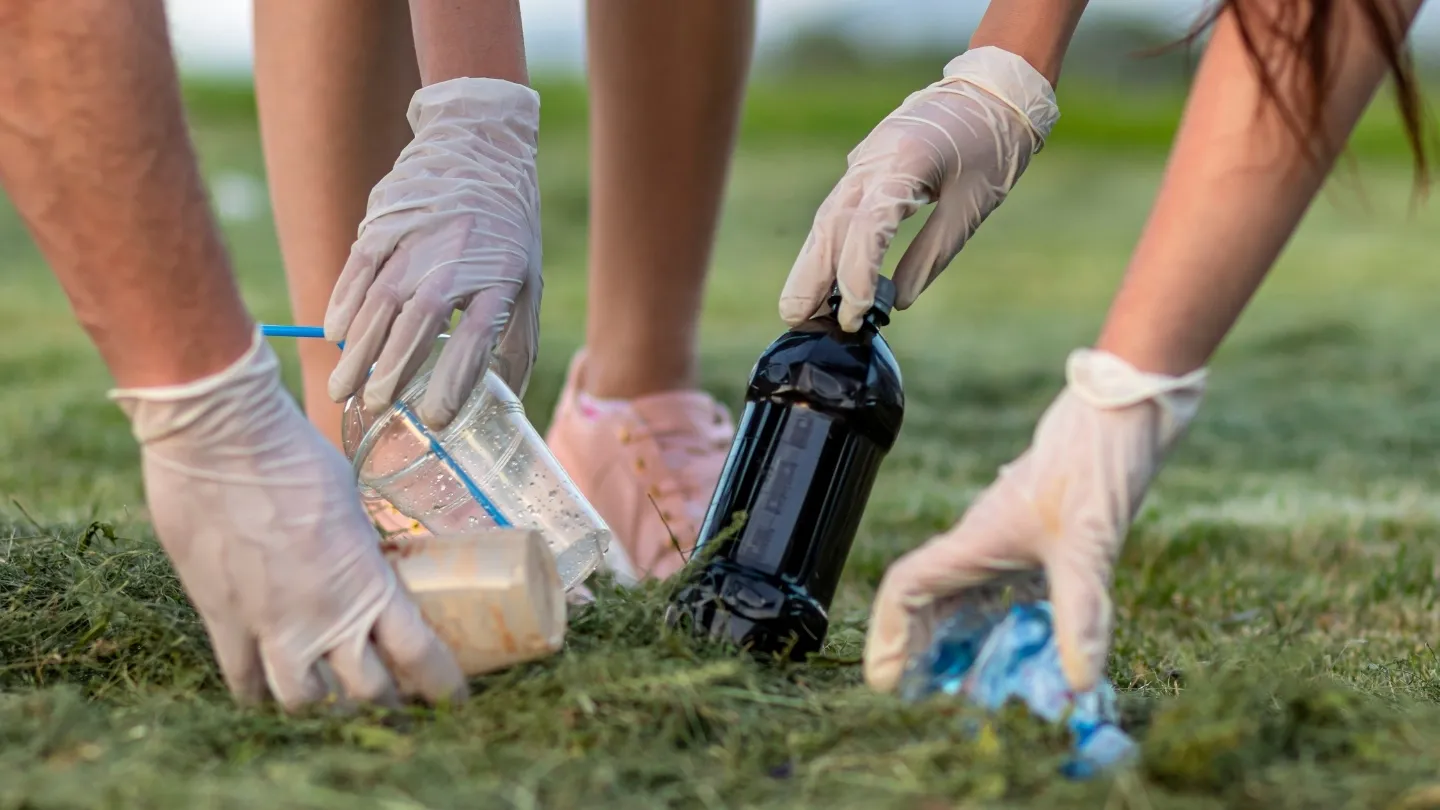
A beach cleanup is an environmental volunteer activity in which a group collects, sorts, and weighs the waste from a stretch of coastline. It’s the flagship activity on June 5th because it generates a visible impact in just one hour and produces reusable impact data for CSR and ESG reports.

What materials and permits do you need for a beach cleanup?

You need four things: 

• Municipal authorization:  you must request it from the city council of the city where you want to carry out the beach cleaning. 

·  Safety equipment:  heavy-duty gloves, tweezers, closed-toe shoes, sun protection. 

•  Bags or sacks  to store all the waste you find

•  Initial briefing with instructions:  to warn about dangerous objects such as glass and syringes. It is also important to explain that elements that are part of nature (algae, shells, stones) should not be collected, only the items that humans have left there: cans, cigarette butts, microplastics, etc. 

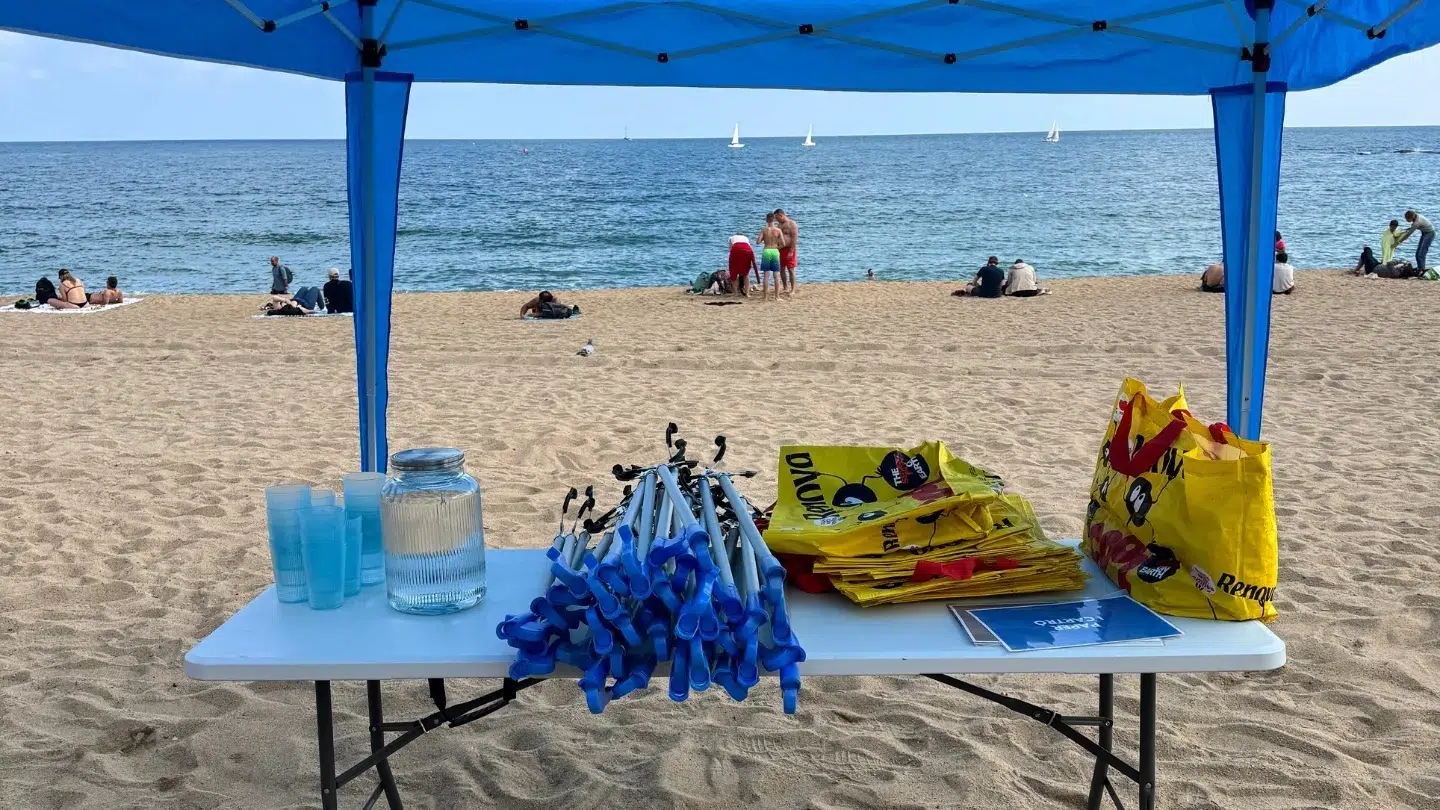
Carpa con pinzas, cubos y bolsas preparada antes de una limpieza de playa

Tweezers, sorting buckets and bags prepared before a beach cleanup: without this prior setup, the day produces no data.

How to turn collected waste into data for your ESG report?

Weighing and sorting.  Weighing the waste transforms a beach cleanup into an act of citizen science:  it allows us to identify the most polluting items (cigarette butts, wipes, single-use containers) and share that evidence with the school administration or the town hall. During our beach cleanup with Escola Pia Sarrià-Calassanç , 160 students collected  55 kg of waste in one hour at Mar Bella beach. 

A swap meet is a temporary space where people bring items in good condition that they no longer use (clothes, books, toys, and small appliances) and take other items, without any money changing hands.  It directly contributes to waste prevention,  the highest level of the European waste hierarchy, ahead of recycling. 

How is an exchange market organized in a company or municipality?

With three decisions: 

·  Which categories are accepted:  at Go Zero Waste we propose simplifying to three or four categories (clothing, toys and books). 

•  What exchange system is used:  is it a direct exchange or a points or voucher system? At Go Zero Waste, we prefer the points system because it allows you to more easily decide which item to take home, thanks to the vouchers earned from the items each person has brought. 

What  happens to the remaining items?  The usual practice is to arrange beforehand with a local social organization for the donation of items that haven’t found a new owner. Many NGOs and social organizations can then donate them to individuals or families with fewer resources, giving the items a second life. 

Mesas con ropa, juguetes y libros por categorías en un mercado de intercambio dentro de una empresa

What is the environmental impact of swapping instead of buying?

A lot, especially in textiles.  In Spain, around 19 kilos of textile waste are generated per person per year. Only 12.9% is collected separately,  according to a ModaRe report . 

Sustainability training allows for long-term changes in purchasing , separation, and design decisions. 

What content should a circular economy workshop include?

A useful workshop always starts from the real-life context of the participant. The most effective topics are: 
•  Waste hierarchy:  focusing on prevention, reuse, and recycling. 

•  Proper separation in the office and at home:  clearly explain how we can improve sustainability with small actions in different areas. 

•  Action plan with concrete commitments:  for the whole team and that allows taking the first step knowing very well what the final objectives are. 

How can we measure whether sustainability training has worked?

With a before and after indicator. The three most practical are: 
· Percentage of improper waste in office containers

•  Number of commitments fulfilled within three months 

•  Consumption of single-use materials such as cups, bottles, capsules. 

Facilitadora impartiendo un taller de formación en sostenibilidad ante un grupo sentado alrededor de una mesa

The small group around a table allows us to move from generic awareness to an action plan with concrete commitments.

Composting and urban gardening are the two activities that best illustrate organic waste, the  heaviest and least properly separated fraction of household waste. They are ideal for June 5th because they leave something tangible and alive behind: a working composter or a planted garden bed. 

What do you need for an urban composting workshop?

    • A  composter suitable to the space (indoor vermicomposter, community composter for patios or rooftops). 
    • Materials  such as shredded pruning waste and cardboard. 
    • Monitoring  of the composting project. 

    In Barcelona we work with  AbonoKm0 ,  specialists in urban composting. 

Why does a rooftop garden work as a team activity?

Because it fosters continuity. A garden needs watering, care, and shifts, so  it transforms a one-off activity into a shared routine  and a meeting point between departments. We collaborated with Huertos in the Sky , a company specializing in urban rooftop gardens in Barcelona, ​​for the design and implementation. 

Mesa de taller de huerto urbano con macetas, sustrato, herramientas y guías de planificación de cultivos
5

Blind tasting of environmental and social products

A high-impact blind tasting involves tasting and scoring products  without seeing the label or brand.  During the tasting, we can discuss each sample: organic production, fair trade, local sourcing, production by a supported employment center or a social cooperative. The learning isn’t explained by anyone; it’s discovered by the participants themselves. 

What exactly is tasted in an impactful blind tasting?

Products that have a clear social and environmental impact. These can include preserves, juices, bread, cheeses, chocolates, oils, etc. 

What prejudice does a blind tasting overcome?

• The idea that sustainable food tastes worse. Data supports the fact that responsible consumption remains a minority practice:  Spanish households spent €59.44 per person on organic products in 2024 , barely 3.2% of total food expenditure. 

In a blind tasting, the product is tasted and scored without seeing the label: first the taste, then the story of the product.

6

Bioblitz

A bioblitz is an  intensive biodiversity sampling in which a group identifies and records all the species they find in a given area during a limited time with the help of naturalists and citizen science applications.  

What do you need to organize a bioblitz?

  • A delimited space: a park, a stretch of river, a school playground, even a rooftop. 
  • A  logging application  like iNaturalist where observations are validated by the scientific community, and at least one 
  • An expert in identification (botany, entomology or ornithology) to accompany the group. 
  •  

Who can help you organize it?

The most effective thing to do is to contact  local naturalist groups  or entities such as  SEO/Bird Life with whom we did the Secrets Veïnals project where challenges were overcome if a series of animals and plants were identified. 

Girasol en flor en un campo al atardecer

Un bioblitz empieza así: mirando de cerca lo que crece en un espacio delimitado y registrándolo.

7
FAQs

- When is World Environment Day celebrated?

World Environment Day is celebrated every June 5th.  It was established by the United Nations General Assembly in 1972 and has been commemorated since 1973. It is coordinated by the United Nations Environment Programme (UNEP) and more than 150 countries participate. 

- How many people does it take to organize a beach cleanup?

It works for groups from  5 people  up to more than 300.  With large groups, the key is to divide into subgroups of 50 with a leader each and an assigned section of beach. 

- Can anyone participate in these activities?

Yes. They are suitable for all ages.  Minors must be accompanied by an adult, and it is always important to have an initial talk. 

- How much does it cost to organize an activity for World Environment Day?

It depends on three variables: 

  • Participant number
  • Duration 
  • Materials needed to carry out the activity
Mesa de taller de huerto urbano con macetas, sustrato, herramientas y guías de planificación de cultivos
Residuos clasificados en cubos por tipo tras una limpieza de playa: colillas, plásticos y tapones

- On what other dates of the year do these activities work well?

· April 22, International Mother Earth Day:  fits with any of the activities we propose, especially the bioblitz and the urban garden, because it is in the middle of spring. 

· June 8th, World Oceans Day : the natural date for a beach cleanup, just three days from June 5th if you want to combine both. 

· Third Saturday of September, World Cleanup Day : the world’s largest cleanup day: ideal for cleanups with neighbors and families. 

· September 29, International Day of Awareness of Food Loss and Waste: a good time for cooking demonstrations of resourceful cuisine and blind tastings of products with social and environmental impact. 

· Last week of November, European Week for Waste Reduction ( EWWR ): the best window for exchange markets, waste audits and training, because actions are registered on the European platform and gain visibility. 

8

Summary and conclusions

World Environment Day, celebrated every June 5th, is the largest global platform for environmental action and a concrete opportunity for businesses, schools, and local councils to carry out activities with measurable impact. In this article, we propose the following ideas: beach cleanups, swap meets, sustainability training, blind food tastings, composting and urban gardening workshops, and urban biodiversity bioblitzes. They all share a common goal: to move from general awareness to action backed by data.

✅ An activity without data is an incomplete activity.  Weighing, classifying, and recording is what transforms a pleasant day into an indicator for the sustainability report. 

✅ Prevention is worth more than recycling. Swap-in markets operate at the top of the waste hierarchy, ahead of any recycling bin. 

✅ Direct action engages, training consolidates.  Combining a cleansing with a training session multiplies the effect of both. 

✅ Our own waste is the best argument.  Knowing the waste we generate helps us decide what action we can take. 

8

Bibliography

💡Do you want to organize an activity for World Environment Day or a similar date?

At Go Zero Waste, we organize all the activities mentioned in the article. We take care of everything: permits, materials, facilitation, and the impact report.

Book a free call with our team to plan your event. 

AUTHOR

Magda Cebrián

Co-Founder & CMO of Go Zero Waste

Environmental consultant and impact entrepreneur, based in Barcelona and specializing in sustainability, zero waste and circular economy.

12 years
experience
200+
projects
87
published articles

Related posts

What is plogging: sport, environmental awareness and community in action

Blog 06/18/2026 Magda Cebrián ¿Y si cada vez que salieras a correr pudieras dejar el mundo un poco más limpio de lo que lo encontraste? Eso es exactamente lo que…
How to organize a beach cleanup?

Organizing a beach cleanup is an excellent way to generate environmental and social impact: it strengthens community values ​​and actively contributes to protecting our coastal ecosystems. Here's how to do…
What is Let’s Clean Up Europe

Participating in a beach cleanup helps you understand how poorly we manage the waste we generate.