
Sustainability challenge
-
Personalized sustainable challenges program that turns sustainability into concrete, measurable and shared actions
-
From 7 to 30 days of intensive campaign depending on your objectives
-
Designed for companies, municipalities and educational centers that want to move from awareness to action
Each person in Europe generates an average of 517 kilograms of waste per year
Source: Eurostat
Hi!
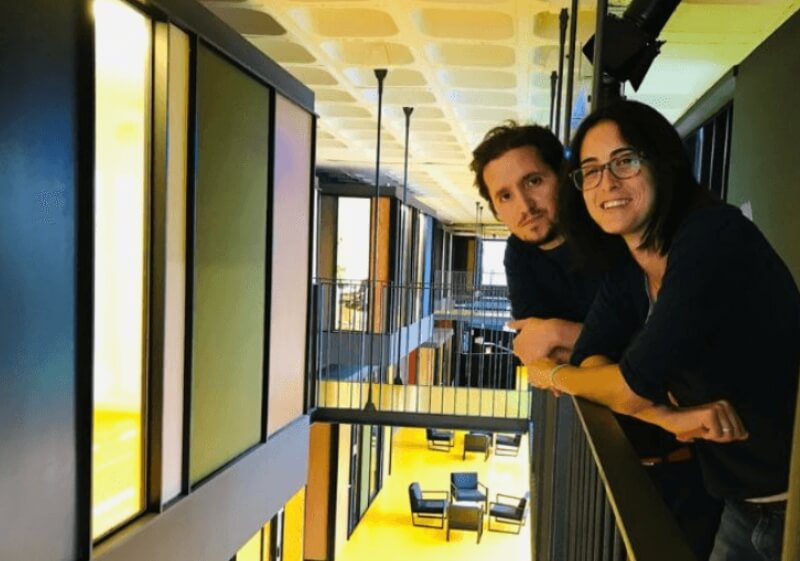
We are Magda and Martí
In 2019, we founded Go Zero Waste with a very specific purpose: to create solutions that support people on their journey to zero waste . What began as a New Year’s resolution between the two of us is now a company that has worked with organizations like IKEA, KPMG, LinkedIn, and Allianz. Our sustainable challenges
program allows us to help change habits. When someone buys in bulk for the first time or brings their own container to the butcher, they’re not just complying with a policy; they’re changing a habit. And sustainable habits stick.
What are sustainable challenges?
Sustainable challenges are concrete, everyday actions proposed to individuals or communities over a specific period, with the goal of transforming awareness into real, measurable action. The challenge demands doing something, not just hearing about it. The model is based on three pillars:
Concrete action, not theory
Each challenge has a different level of difficulty . We start with the easy challenges and gradually increase the difficulty.
Gamification and community
Challenges are scored , unlocked , and shared . Healthy competition and group visibility are the driving force behind participation.
Impact measurement
Each completed task is associated with a calculation of waste avoided . At the end of the program, we provide a report detailing the waste not generated, the challenges completed, and the prizes awarded to the top participants.
Why is it important to propose sustainability challenges to people?
Knowing where to start
They replace an abstract goal with a list of small, achievable actions.
Connect the values
For companies and schools, it allows them to connect their stated values with the people who make them up.
Boost local commerce
Gift cards for the top participants can be redeemed at participating green businesses.
Ecological challenges aligned with SDGs 11, 12 and 13
Our ecological challenges program contributes directly to three Sustainable Development Goals .
SDG 11 | Cities and
sustainable communities
Challenges related to the territory
They reduce the pressure of waste on urban space and strengthen the local commercial fabric.
ODS 12 | Producción y
consumo responsables
Act in the prevention phase
Challenges that influence the purchase decision: rejecting over-packaging, choosing bulk, repairing rather than buying again…
ODS 13 | Acción por el clima
Challenges overcome in climate impact
Each waste product avoided represents an avoided emission in extraction, manufacturing, transportation, and treatment.
How do sustainable challenges work?
The 6-step process
Analysis of the waste generated
We conduct an assessment of the waste generated by the organization through a waste audit.
Identifying the challenges
Analyzing the audit, we designed a catalog of 30 customized challenges with clear reduction objectives. A challenge for an office with a vending machine is not the same as one for a municipality with a permanent or weekly market.
Co-creation of activities and awards
We selected the in-person activities that would accompany the campaign – workshops, showcookings, cleanings, exchange markets, etc. – the prizes and the dates .
Internal and external communication plan
We created a posting plan for social media and for the organization’s internal channels, with ready-to-use graphic materials.
Launch and support for 30 days
The campaign is underway. We provide continuous technical support via email, phone, and WhatsApp throughout the program, both to the organizers and the participants.
Impact report, diplomas and awards.
We conclude with a results meeting: a report on the waste avoided, a compilation of the challenges overcome and the photographs received, a diploma for all participants, and the awarding of prizes to those who have completed the most challenges.
How do users overcome challenges?
Three steps, from the App to the delivery point: participating is as easy as taking a photo.
They download the app and activate the campaign
Each participant registers on the Go Zero Waste app and enters their local council or company’s campaign code. From that moment on, they can see all the available challenges.
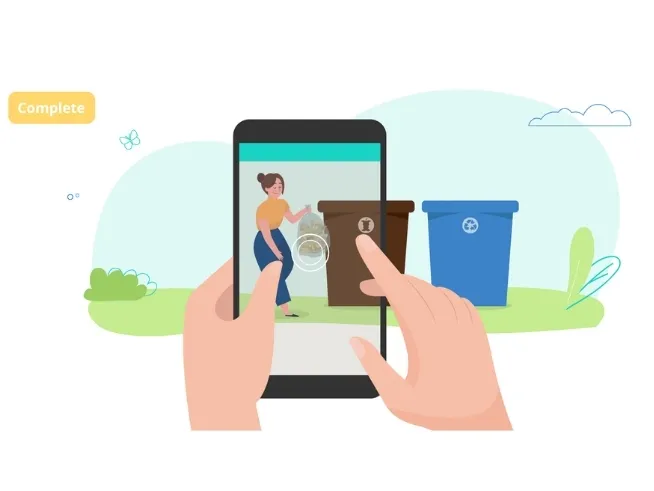
They overcome the challenge by sending a photograph
The user chooses a challenge, completes it in their daily life, and uploads a photo as proof directly from the app. Simple, fast, and paperless.
We passed the challenge and handed over the points
From our back office, we review each challenge and approve or reject it. If approved, the user is automatically credited with the points and moves up in the ranking.
Impact of our sustainable challenge programs
+90
Programs carried out
+120
With more than 120 environmental education activities that complement the programs
+25.000
Sustainable challenges overcome
Where do we conduct sustainable challenge programs?
Companies
- In any company that has a shared workspace, an internal culture to nurture, and waste to reduce.
- We work in offices and corporate headquarters. These are the environments where results are seen most quickly.
- Also in coworking spaces and shared workspaces, where the campaign has a multiplier effect: the same program reaches dozens of different companies at the same time.
- And in companies with distributed or remote teams. Since the challenges are managed through the app, a person working remotely from home competes in the same campaign as the head office.
Municipalities
- We work with small and medium-sized municipalities, where the community effect is strongest: the campaign’s impact is felt on the streets, in the market, and in the town’s WhatsApp group. We’ve done this in Blanes, Manlleu, Iguadala, Balsareny, Premià de Dalt, Les Cabanyes, and Vilanova i La Geltrú, among others.
- We also work with intermunicipal associations and groups of municipalities, where a single campaign covers several towns at once, allowing for shared costs and communication. In the La Plana intermunicipal association, we rolled out the program simultaneously in Tona and Taradell, offering locally sourced products as a reward for supporting local businesses.
- The municipal areas with which we collaborate most are those of Environment, Waste, Economic Promotion, Commerce, Education and Citizen Participation.
Educational centers
- We work with preschools and primary schools, where challenges are adapted to narrative and play-based formats. At the La Cabanyeta Municipal Preschool, we conducted a storytelling session about the 3Rs to introduce sustainability to young children.
- With institutes, where the challenge can be linked to the curriculum of science, technology or ethical values, and where competition by teams or by classes works especially well.
- With universities and business schools, in programs like the one we did for Rirsumeikan University in Japan.
- And with training and hospitality schools , where the challenge is directly connected to the practice of the trade.
Benefits of sustainable challenges
Measurable waste reduction
In the workplace and in the homes of the participants.
Action in the prevention phase
The most effective in the waste hierarchy, ahead of recycling.
Lower associated carbon footprint
To the extraction, manufacture and treatment of the avoided materials.
Discovering nearby sustainable options
Extend the effect beyond the campaign
It strengthens the sense of shared responsibility.
The impact is no longer the responsibility of just one department or person in charge.
Direct reduction of waste management costs
By decreasing the volume generated.
Check out our posts on sustainable challenges
- How long does a sustainable challenges program last?
The standard format is 30/31 days , which is the period in which we have found participation to be sustained without fatigue. For municipal campaigns or annual programs, we extend it to 12 months, structuring the challenges into thematic waves. The duration is decided in the co-creation session, according to your organization’s objectives and schedule.
- Does everyone need to download an app?
No. The app is the main channel because it allows us to measure the impact, but we always offer a parallel analog option: paper cards with challenges that are validated with a stamp at participating establishments or at the workplace itself. We did this in Blanes precisely to ensure that those with a digital divide weren’t left out, and it worked.
- How is the real impact of the challenges measured?
Each challenge includes a waste calculation based on the type of waste and the frequency of the action. At the end, we provide a report detailing the waste avoided , the challenges completed, the number of participants, and the photographs received. This data can be used in sustainability reports and ESG reports.
- Are the challenges the same for all organizations?
No. We started with a waste audit and an anonymous survey of the team, and based on that assessment, we designed the 30 challenges. An office, a hotel, a school, and a municipality generate different types of waste and require different challenges. Personalization is what sets the program apart from a generic list of tips.
- What happens when the campaign ends?
We provided an e-book with 100 additional challenges for participants to complete independently, certificates for all participants, and access to the Go Zero Waste Club. Furthermore, the map of nearby sustainable businesses discovered during the campaign remains available afterward, which is what helps sustainable habits take root rather than fade away.
- Can a challenge program be subsidized?
In many cases, yes. For municipalities, several provincial councils and intermunicipal associations include these types of campaigns in their catalogs, through the Provincial Council’s Service Catalog. For companies, the training component may be eligible for funding through FUNDAE. We’ll review this with you at our first meeting.
Let’s talk
We are ready to organize a sustainable challenges program tailored to the needs of your company, city council, or educational center.